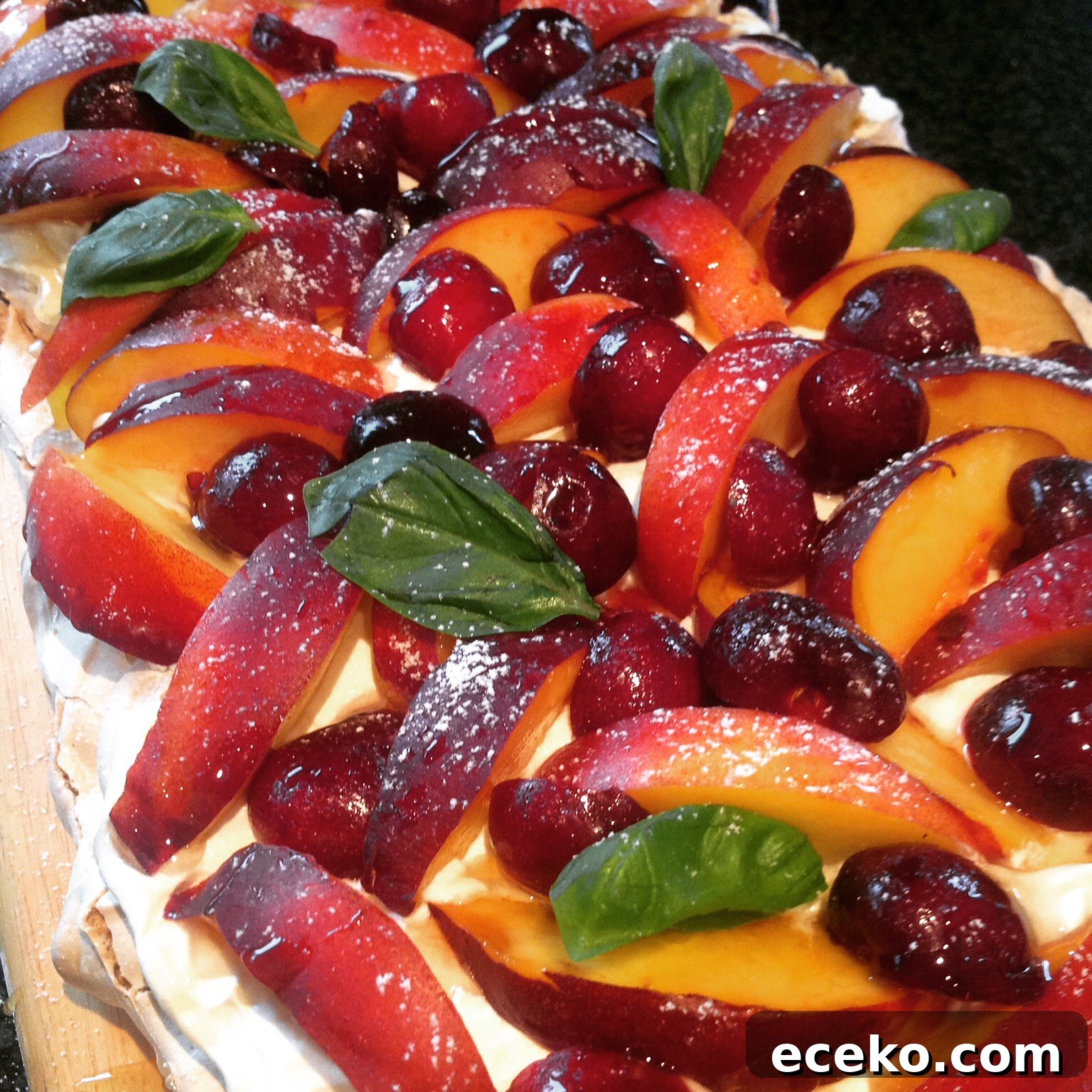
Easy Fresh Fruit Pavlova
This Fresh Fruit Pavlova is an easy, elegant dessert that’s perfect for warm weather and special occasions. Crisp on the outside, soft and marshmallow-like inside, it’s a wonderful vehicle for whipped cream and any fresh fruit you choose.
Serve it at barbecues, garden parties, family gatherings, or as a light finish to a dinner. For winter holidays use seasonal fruits such as poached pears, oranges or pomegranate seeds; for summer, top with berries, stone fruit or tropical fruit. Simple adjustments make this pavlova suitable year-round.
So what is a Pavlova?
Pavlova is a meringue-based dessert named after the Russian ballerina Anna Pavlova. It features a crisp, delicate crust and a soft, light interior. Traditionally it’s topped with whipped cream and fresh fruit, which adds brightness and balances the sweetness of the meringue.
This dessert is especially popular in warm months because it feels light and refreshing, but with small ingredient swaps it adapts well to colder seasons too.
Pavlova / Meringue recipe
This recipe is forgiving and straightforward if you follow a few basic rules: use a clean bowl, beat egg whites to stiff peaks, and ensure the sugar is well dissolved so the meringue is glossy rather than gritty. The edges are baked a little thicker than the center so the middle stays soft.
You can use any combination of fruits—raspberries, blueberries, strawberries, cherries, peaches, nectarines, kiwi or mango all work beautifully. A drizzle of honey or a spoonful of fruit purée adds an extra layer of flavor, and a scattering of fresh mint or basil leaves makes a lovely finishing touch.
More reader pavlovas
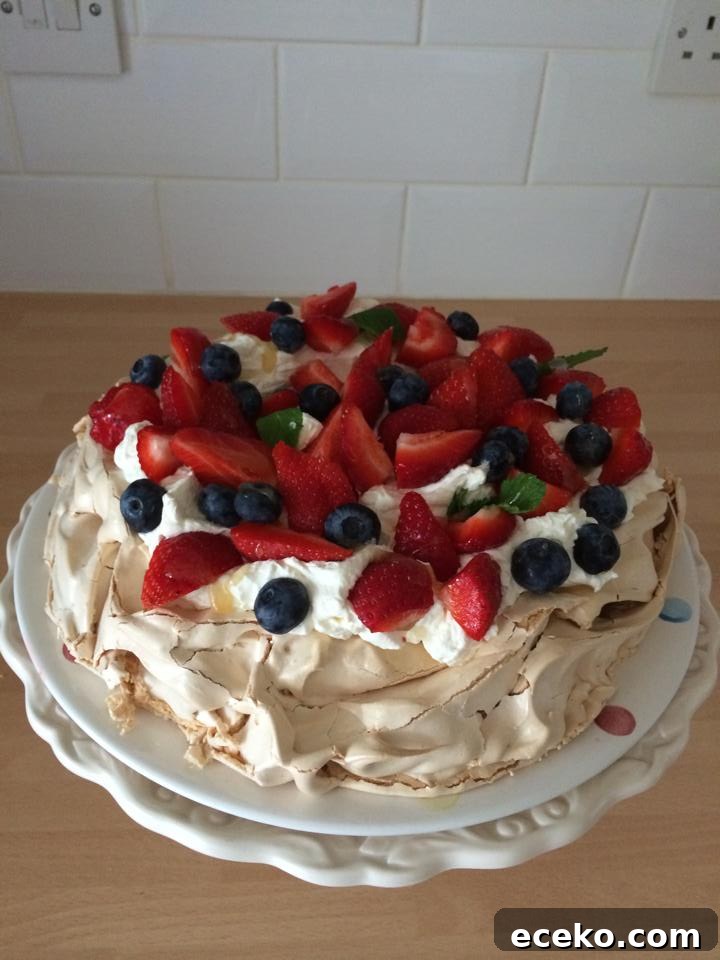
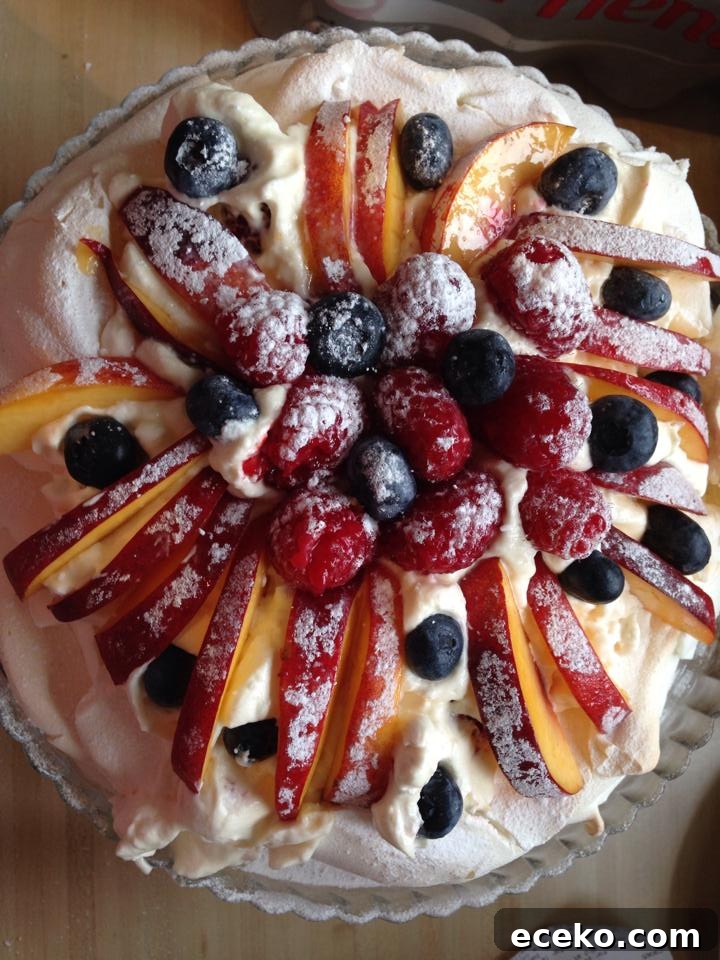
Here are a couple of pavlovas made by readers—each shows how variations in fruit and decoration give a different look and flavor to the same basic meringue base.
Ingredients
- 4 large egg whites (free-range recommended)
- 200 g golden caster sugar
- Pinch of salt
- 300–400 ml double cream, whipped
- Fresh fruits of your choice (example: 2 ripe nectarines and a handful of cherries, pitted)
- Optional: a little fruit purée for extra flavor
- Drizzle of honey
- Mint leaves (or other fresh herbs) for garnish
- Icing sugar for dusting
Instructions
- Preheat the oven to 150°C (300°F, Gas Mark 2).
- Line a large baking tray with baking paper. You can shape the pavlova into a circle, nest, or any preferred shape. Make the edges slightly higher/thicker than the center to create a shell that protects the soft middle.
- Ensure your mixing bowl and beaters are spotlessly clean and dry. Using an electric mixer, beat the egg whites until they form soft peaks.
- With the mixer running, gradually add the sugar and a pinch of salt. Continue whipping on high speed until the meringue is glossy and firm and the sugar has dissolved. This may take around 7 minutes—test a little between your fingers; it should not feel gritty.
- Spoon or pipe the meringue onto the prepared tray in your chosen shape. Smooth the top and create a shallow well in the center for the cream.
- Bake for a minimum of 1 hour and up to 1 hour 15 minutes, until the exterior is a pale golden color and the pavlova is crisp on the outside. Avoid browning too much.
- Turn the oven off and leave the pavlova inside to cool slowly, or remove and leave to cool on a rack. Cooling slowly reduces the chance of large cracks. You can also leave it overnight and fill just before serving.
- When ready to serve, whip the double cream to soft or medium peaks and gently spoon it into the center of the cooled meringue.
- If using, spoon a little fruit purée over the cream for added flavor and color.
- Arrange fresh fruits on top, drizzle with honey, finish with a few mint leaves and a light dusting of icing sugar.
Tips, variations and serving suggestions
For a safer whipped cream stability, chill the bowl and beaters beforehand. If you prefer less sweetness, fold a little Greek yogurt into the whipped cream for tang. For flavor variations, gently fold some lemon zest or a tablespoon of cocoa into the meringue batter before baking.
To serve for a crowd, make two smaller pavlovas rather than one large—they’re easier to transport and slice. Pavlova is best assembled shortly before serving to keep the crisp exterior and soft centre distinct; once topped with cream, the meringue will gradually soften.
Leftovers (if any) can be kept separately: store the baked meringue in an airtight container at room temperature for up to two days, and keep whipped cream refrigerated. Assemble just before serving for the best texture.
Other lovely puddings
If you enjoy this fresh fruit pavlova you might like other make-ahead desserts such as ice cream bakes or fruit-topped pastry slices. Simple recipes that can be prepared in advance are always handy for entertaining.
Big love, Cx