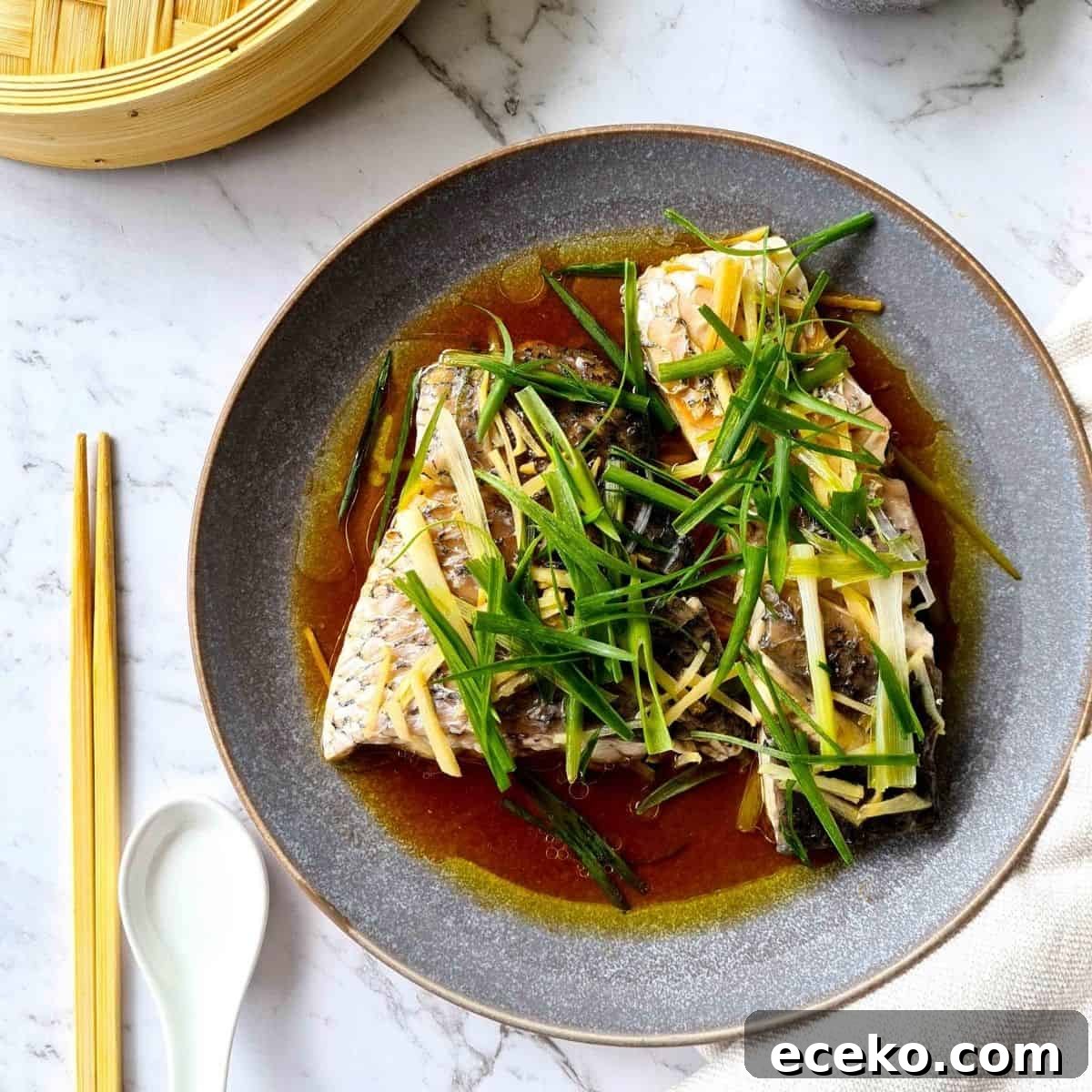
A healthy and delicious way to enjoy fresh fish. Steaming preserves the fish’s delicate, slightly sweet flavour that only comes through when the fish is fresh. This Chinese-style steamed fish highlights that freshness, and the classic pairing of ginger and spring onions (scallions) is perfect. Best of all, the dish takes under 25 minutes from start to finish.
For more quick and easy Chinese recipes, try my Beef Noodle Stir Fry, Prawn Fried Rice or Stir Fried Squid.
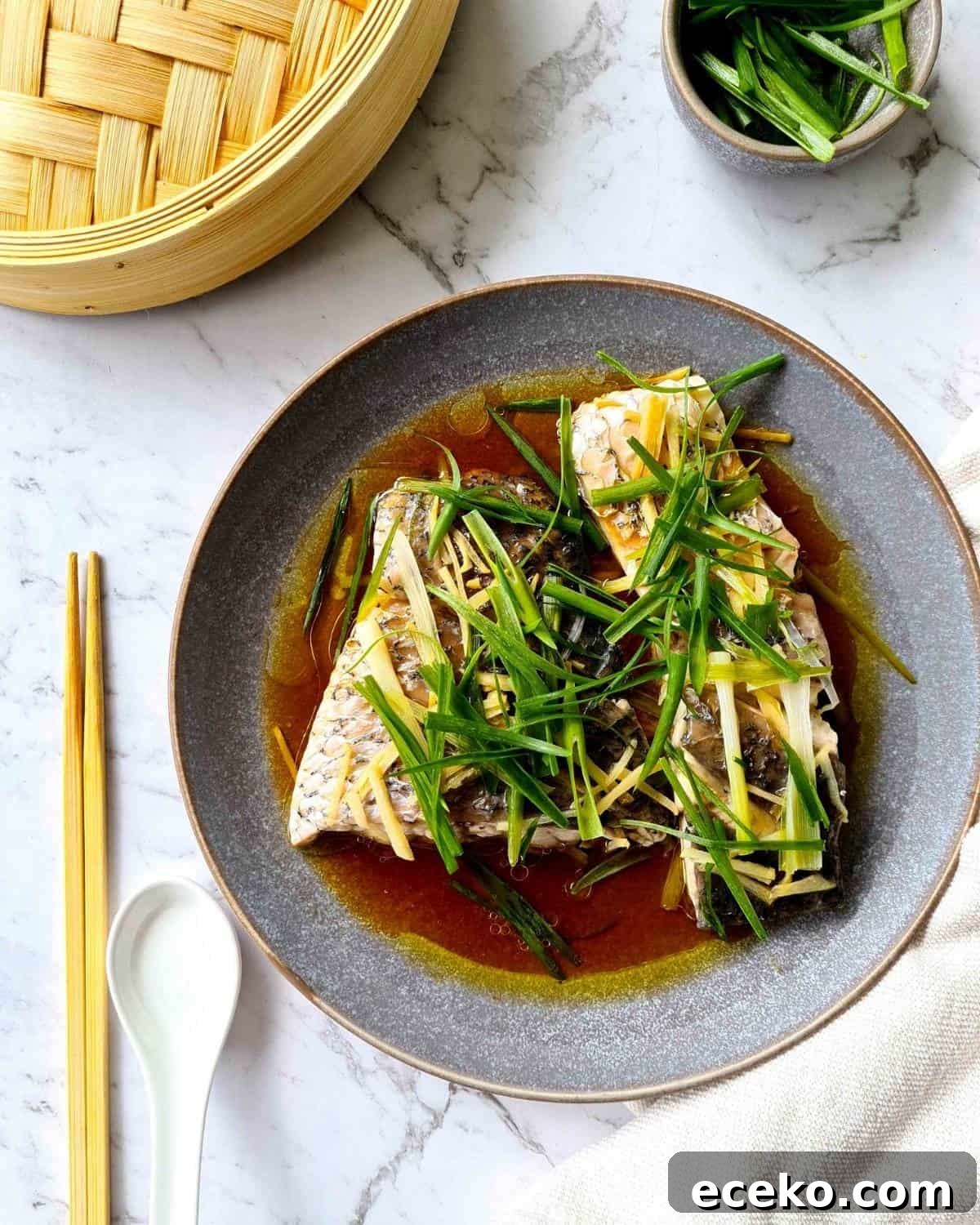
Whole fish or fillets?
The traditional Chinese method uses a whole fish, and with good reason: bone-in fish often deliver the best flavour. If whole fish are available from your fishmonger, use them—this recipe and timing remain the same. Fillets work well too when whole fish aren’t an option from the supermarket.
If you’re preparing this for Lunar New Year, serve the fish whole with head and tail intact for auspicious symbolism: a whole fish represents completeness, with a clear beginning and end.
[feast_advanced_jump_to]
Ingredients
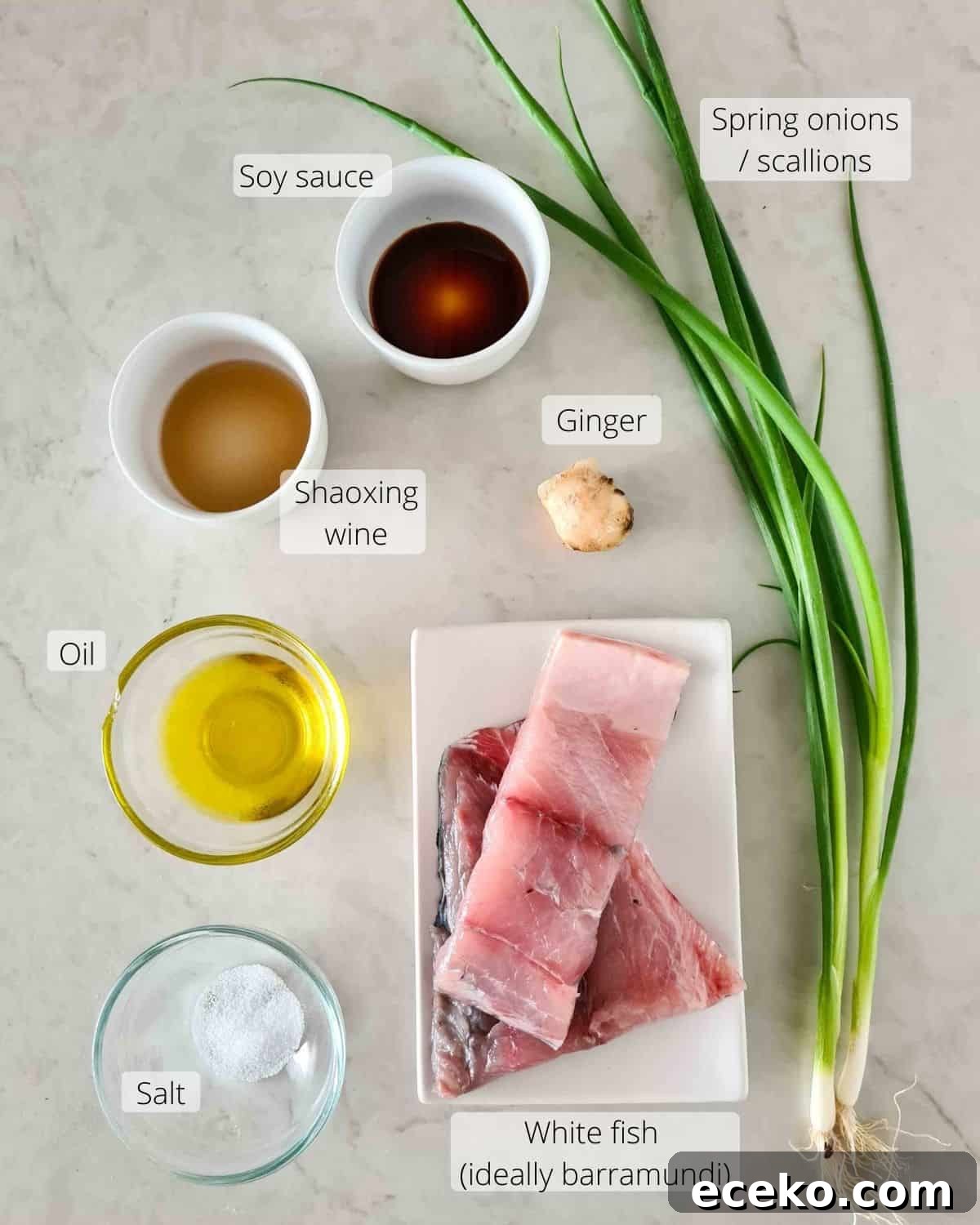
- White fish — any fresh white fish works. I highly recommend barramundi for its silky, buttery texture. Sea bass, cod, snapper or even salmon are great alternatives.
- Soy sauce — adds umami and depth.
- Shaoxing wine — a Chinese rice wine that adds aroma and complexity; dry sherry or mirin can be used as substitutes.
- Oil — use a neutral oil like canola or sunflower. Extra virgin olive oil can work if that’s what you use at home.
How to steam fish
Most of the effort is in preparation; the actual steaming only takes about 7 minutes. Thinly slicing the ginger and spring onions into matchsticks helps the flavours distribute evenly. Reserve the green tops of the spring onions for garnish—their milder flavour adds a bright finish and colour to the dish.
Prepare the fish
Rinse and pat the fish dry. With a sharp knife, make shallow slanted incisions in the thickest part of the fillets (skin side up), about ½ cm deep. A sharp knife gives you control and prevents tearing.
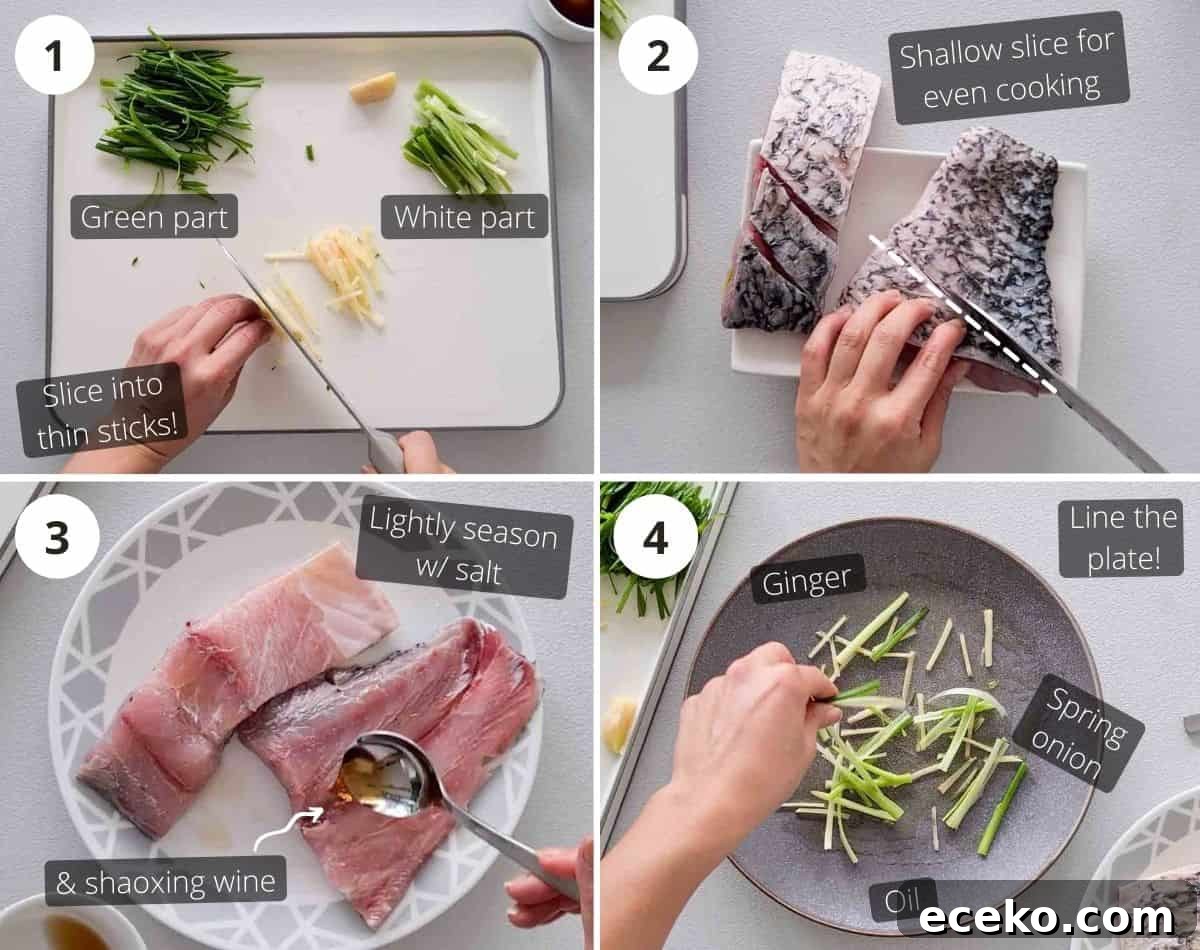
Lightly season both sides of the fish with a small pinch of salt and rub with Shaoxing wine. Let the fillets marinate in the fridge for around 10 minutes—this brief rest allows the seasoning to penetrate the flesh. Remember to season lightly, since soy sauce will be added later.
Steam on high heat
To assemble, oil a plate lightly, scatter some ginger and the white parts of the spring onions, and place the fish on top (skin side up). Drizzle a small amount of soy sauce, then top with the remaining ginger, spring onions, and oil.
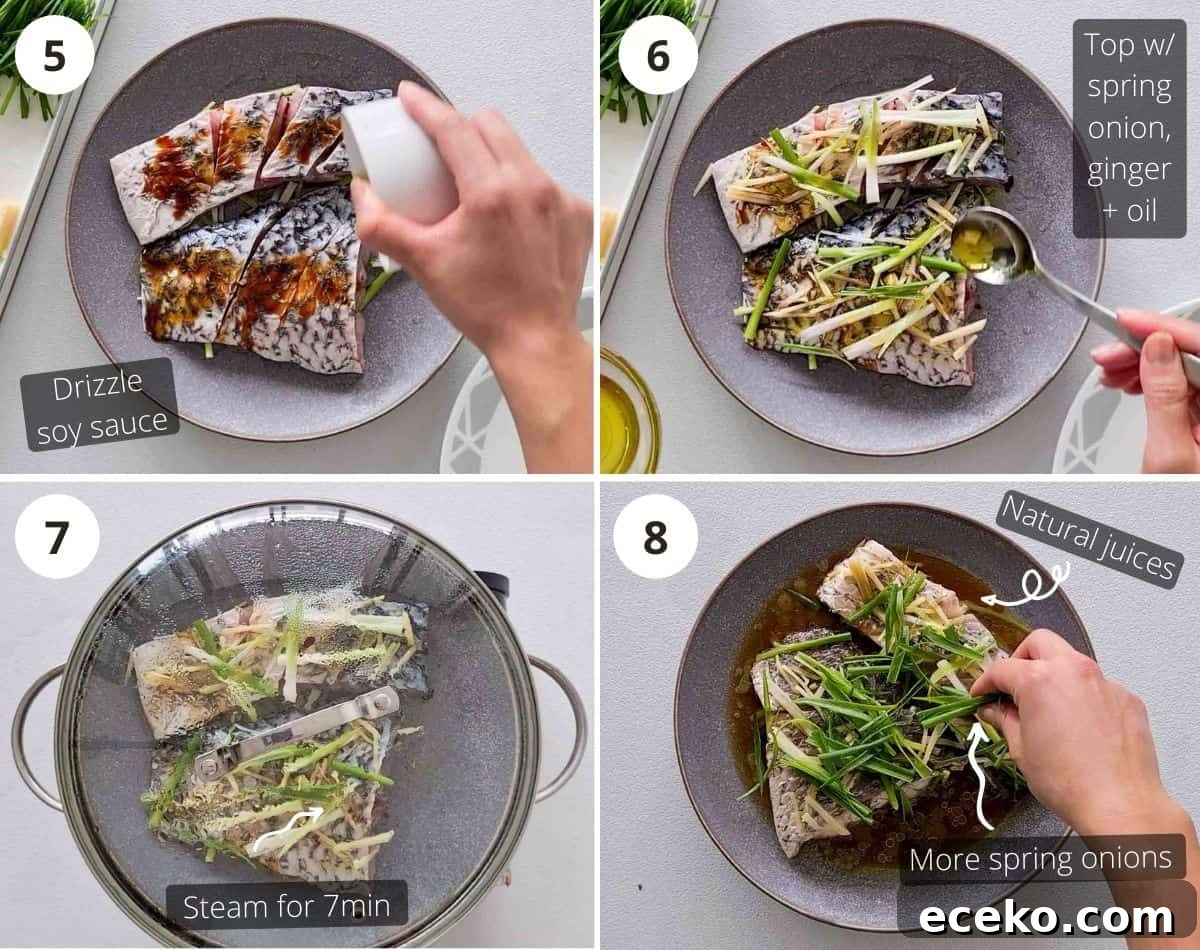
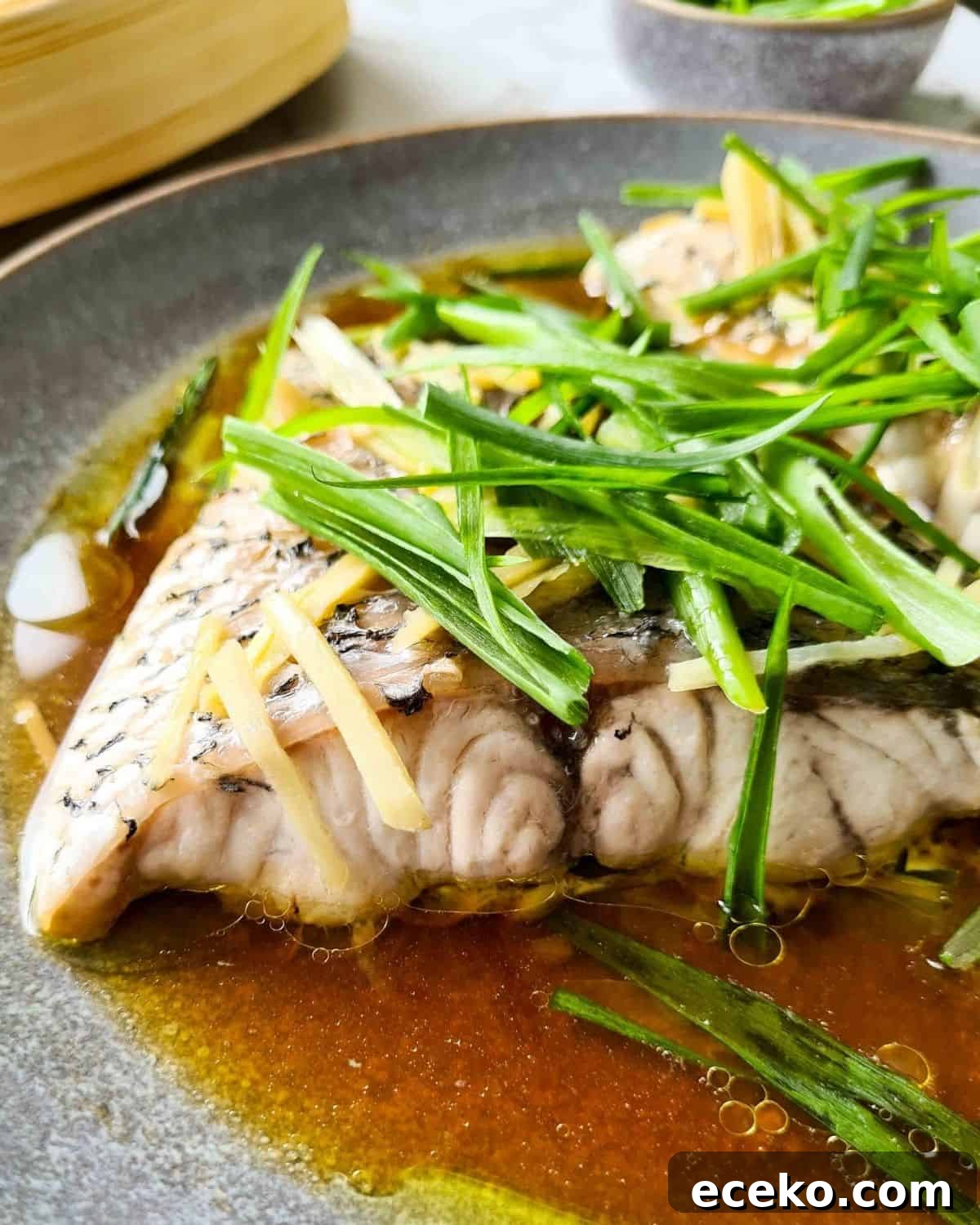
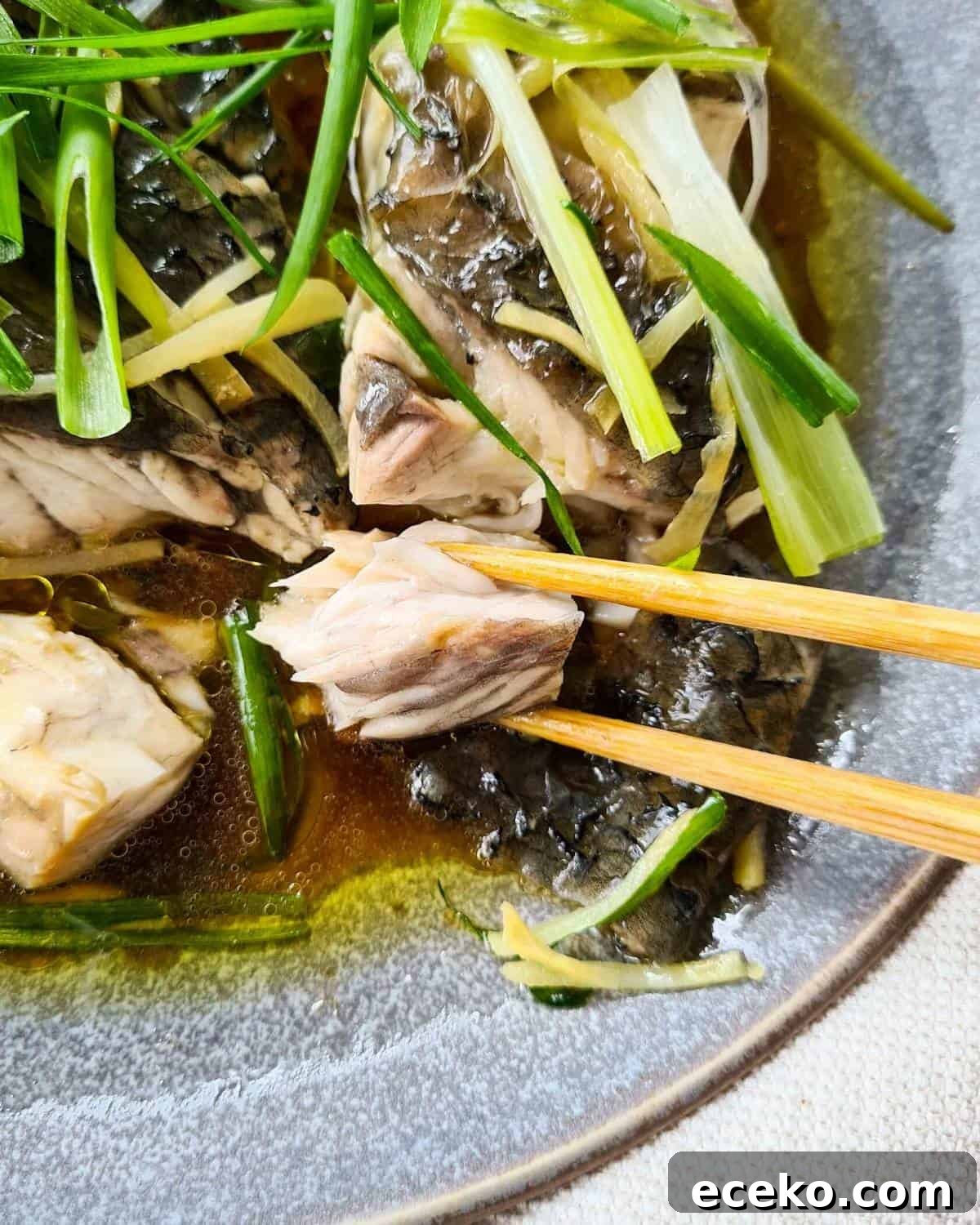
Bring water to a rolling boil in a pot fitted with a steamer. Place the plate of fish into the steamer, cover, and steam on high for about 7 minutes. Check the fish after 7 minutes—overcooking dries and toughens the flesh. The fish is done when it flakes easily with a fork and the flesh is opaque white rather than translucent.
If you enjoy seafood, try a quick Creamy Garlic Prawn Pasta for another weeknight option.
What to serve with Chinese Steamed Fish
This steamed barramundi is light and flavourful, so you can choose either delicate or contrasting sides.
Contrasting sides: pair with something bold like Chinese broccoli with shiitake in oyster sauce or Chicken with Black Bean Sauce.
Delicate sides: serve with simply sautéed or steamed Asian greens—broccolini, carrots or green beans all work well. Tomato and Egg is also a light, comforting option. And freshly steamed white rice is essential to soak up the sauce.
Yes, you can eat the ginger and spring onion matchsticks with the fish, but the ginger is strong and mainly intended to flavour the fish and sauce—many people prefer not to eat large amounts of it on its own.
Tips for making this dish perfect every time
- Always drizzle with oil. A thin coat of oil helps keep the fish moist and gives the sauce a glossy finish.
- Season lightly and marinate briefly. Salt and Shaoxing wine for about 10 minutes before steaming lets the flavours develop without overpowering the fish.
- Steam on high heat only when the water is already boiling. Keep the lid closed to maintain consistent heat.
- Steam for 7–8 minutes. Check the fish after 7 minutes; if not done, continue checking every minute. Overcooking is the most common mistake—aim for tender, flaky flesh.
The glossy sauce around the fish is the fish’s natural juices concentrated with ginger and scallion flavour. It’s delicious—dip a bite of fish into it for the best experience.
Good to know (FAQs)
One traditional method is to poke the thickest part of the fish with a chopstick; if there’s no resistance, it’s cooked. Another reliable method is to use a fork at an angle and twist slightly—if the flesh flakes easily and is opaque white, it’s done.
About 7–8 minutes. Avoid steaming longer than 8 minutes to prevent the fish from becoming dry and tough.
Use fresh fish for steaming. Frozen-then-thawed fish often has a stronger “fishy” smell and is better suited to methods like pan-frying or searing, which can mask that flavour.
Cut the spring onions into manageable lengths (about 10 cm), slice them lengthwise into thin strips, then cut into shorter matchsticks (around 4 cm).
Barramundi is my top pick, but sea bass, cod, snapper or even salmon work well.
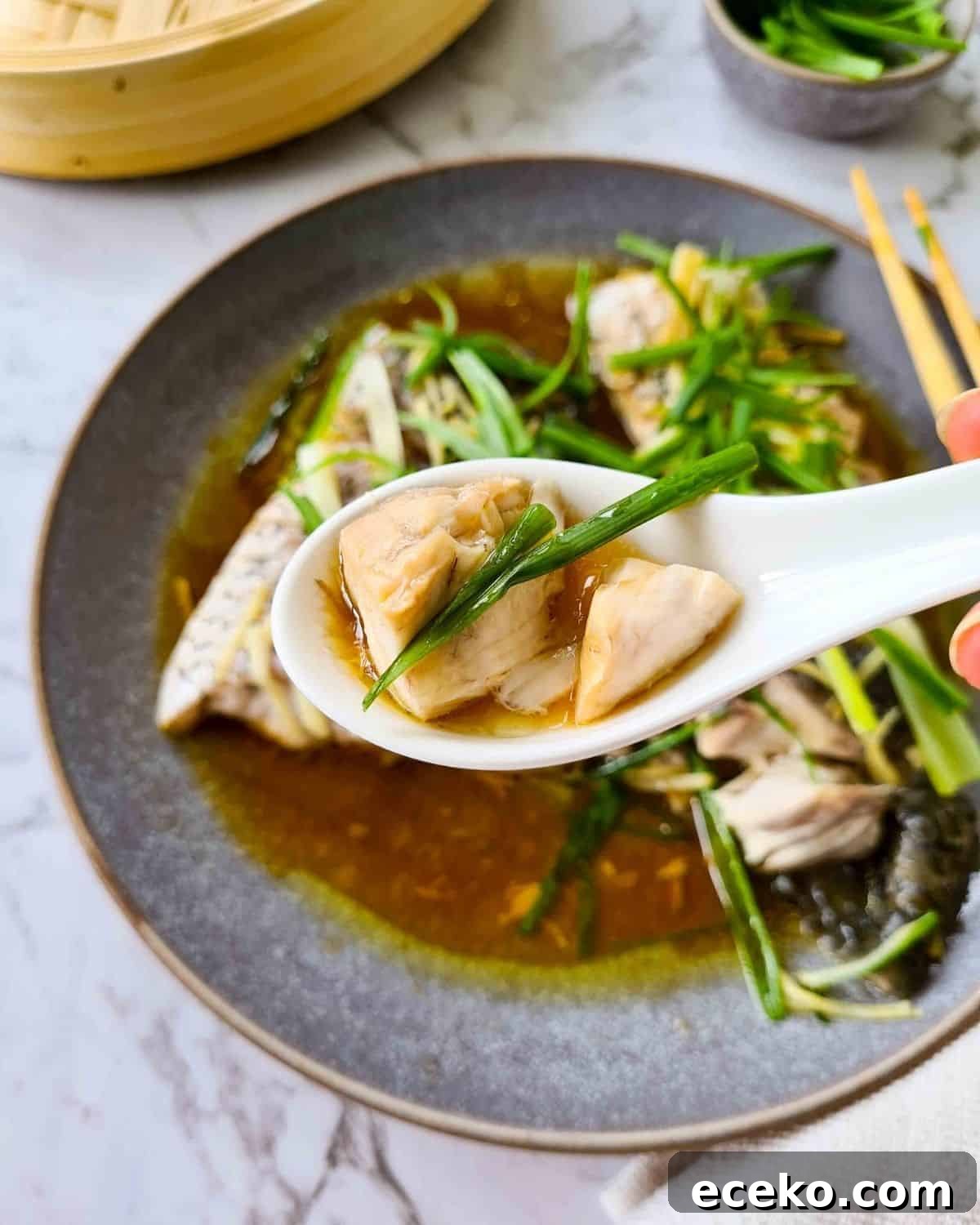
After that spoonful was photographed, I happily ate it — the fish was soft, silky and delicious.
Leftovers/freezing
Steamed fish is best eaten fresh; it rarely tastes as good the next day. If you need to store leftovers, keep them in the fridge and consume within 3 days, though I recommend finishing them the next day. Reheating can intensify the fishy aroma.
Made this Chinese Steamed Fish with Ginger and Spring Onions recipe? Let me know your thoughts in the comments — I’d love to hear from you.
Happy cooking!
Gen
📖 Recipe
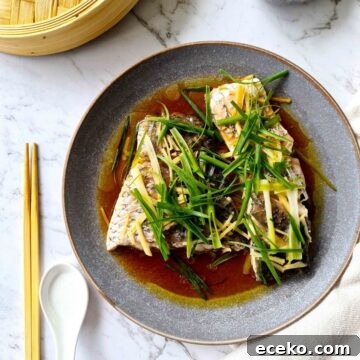
Chinese Steamed Fish with Ginger and Spring Onions
Ingredients
- 2 fillets fresh white fish ~200g/7oz each
- 2 spring onions/scallions sliced into thin matchsticks
- 2½ cm fresh ginger /1 inch, sliced into thin matchsticks
- 2 tablespoon oil canola or sunflower
- 1 tablespoon shaoxing wine substitute: mirin or dry sherry
- 1 teaspoon soy sauce
- ¼ teaspoon salt ~4 small pinches
Instructions
-
Separate the green and white parts of the sliced spring onions and set aside.
Marinate the fish fillets
-
With a sharp knife, make 2–3 slanted incisions into the flesh of each fillet, about ½ cm deep, skin side up. Do not cut through.
-
Lightly season each fillet with a small pinch of salt per side and rub with Shaoxing wine. Chill in the fridge for about 10 minutes to let the seasoning absorb.
Steaming
-
Bring water to a boil in a deep pot set up for steaming.
-
Take the fish from the fridge. Coat the steaming plate with 1 tablespoon oil, scatter half the ginger and the white parts of the spring onions, and place the fish on top, skin side up.
-
Drizzle soy sauce over the fillets and spread evenly.
-
Scatter the remaining ginger and white parts of spring onions over the fish and drizzle the remaining oil.
-
Steam on high for 7 minutes or until the fish is cooked through (see notes for testing).
-
To serve, top the fish with the green parts of the spring onions and serve immediately.
Notes
Use fresh fish for steaming rather than previously frozen fish. Steaming highlights delicate flavours, and frozen fish can carry a stronger smell that is less suitable for this method.
White and green parts of spring onions — The white parts are sharper and used for flavouring during cooking; the green parts are milder and used as a garnish.
Incisions — Making shallow cuts helps the fish cook evenly, especially for thicker fillets or whole fish.
Testing for doneness — Pierce the thickest part with a chopstick: no resistance indicates cooked. Or use a fork to twist gently; if the flesh flakes, it’s done. The fish should be opaque white, not translucent.
Nutrition estimates account for all ingredients used in the recipe and are approximate.
Tried this recipe?
Mention @Casuallypeckish or tag #casuallypeckish!
Nutrition
|
Carbohydrates: 15.3g
|
Protein: 38.9g
More quick and easy Asian recipes
-
Marinated Chicken stir fry with Green Beans
-
Honey Soy Chicken Drumsticks
-
San choy bow (lettuce wraps)
-
Chinese chicken and corn soup