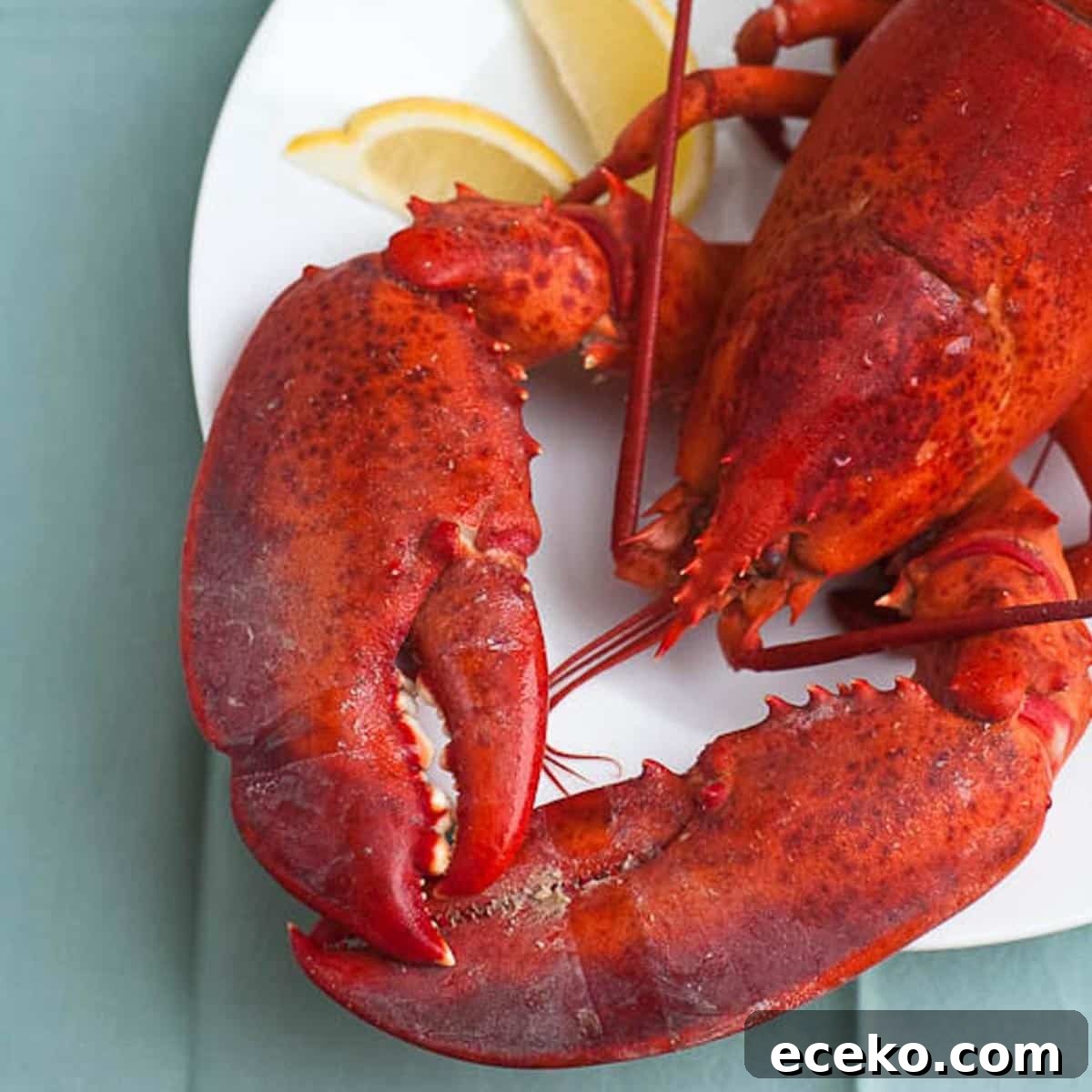
Everything you need to know about cooking live lobster and eating a whole lobster, including a detailed video that shows how to find and remove every last morsel of meat.
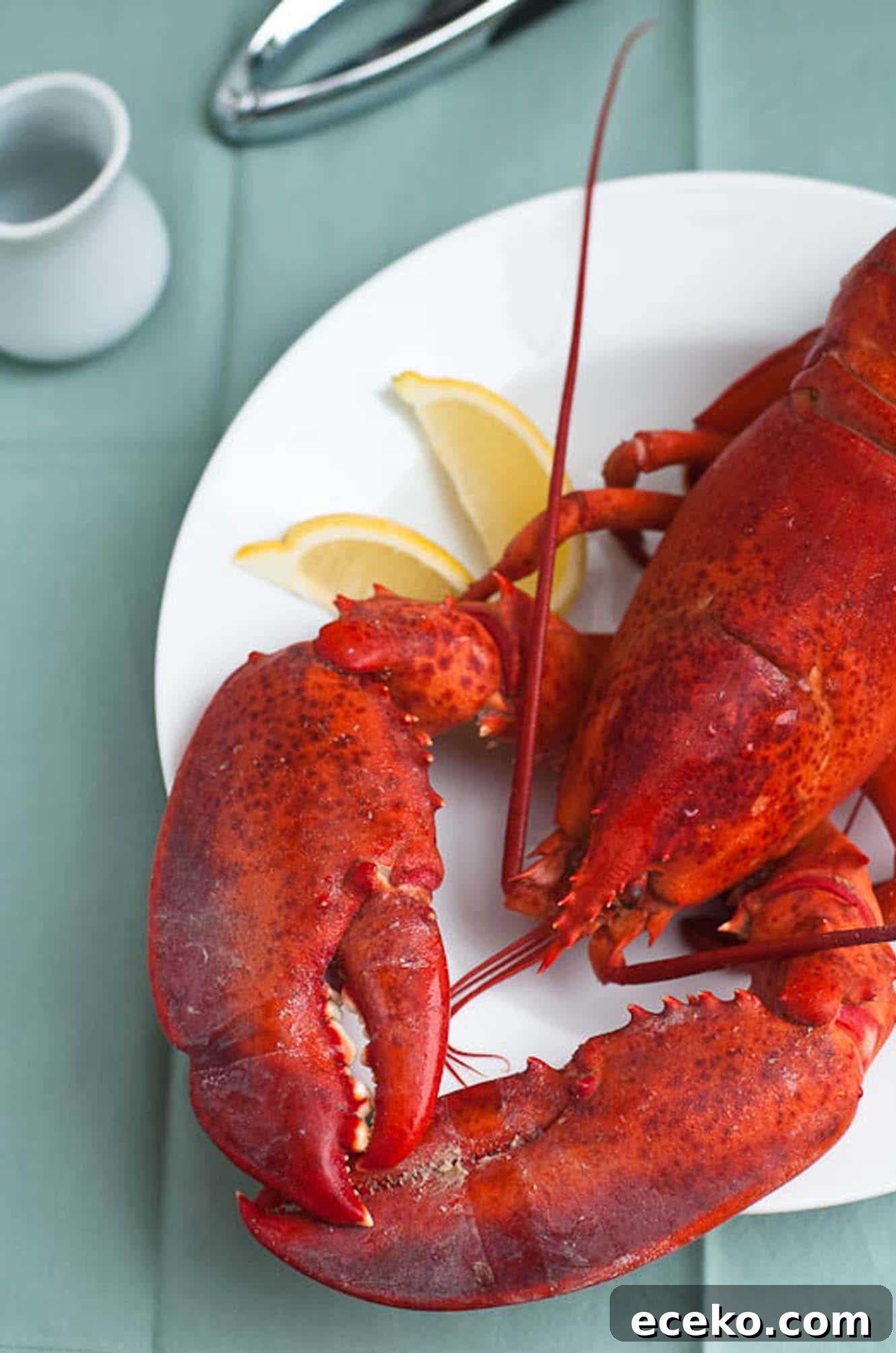
Why this guide works
Buying and cooking live lobster can feel intimidating, and learning to eat a whole lobster has its own learning curve. Over years of cooking and enjoying countless lobsters — with training from culinary school and hands-on experience from someone raised on the Maine coast — I’ve refined a clear, reliable approach. This guide explains each step so you can feel confident from buying to the last bite.
In this post you’ll learn how to:
- Shop for live lobster
- Store lobsters until cooking
- Dispatch lobsters as humanely as possible (options provided)
- Cook any size lobster to tender perfection
- Prepare a simple lemon butter
- Break down and eat a whole lobster, step by step
There is also a 24-minute video that shows the full breakdown and picking process.
Let’s get started.
How to choose a live lobster
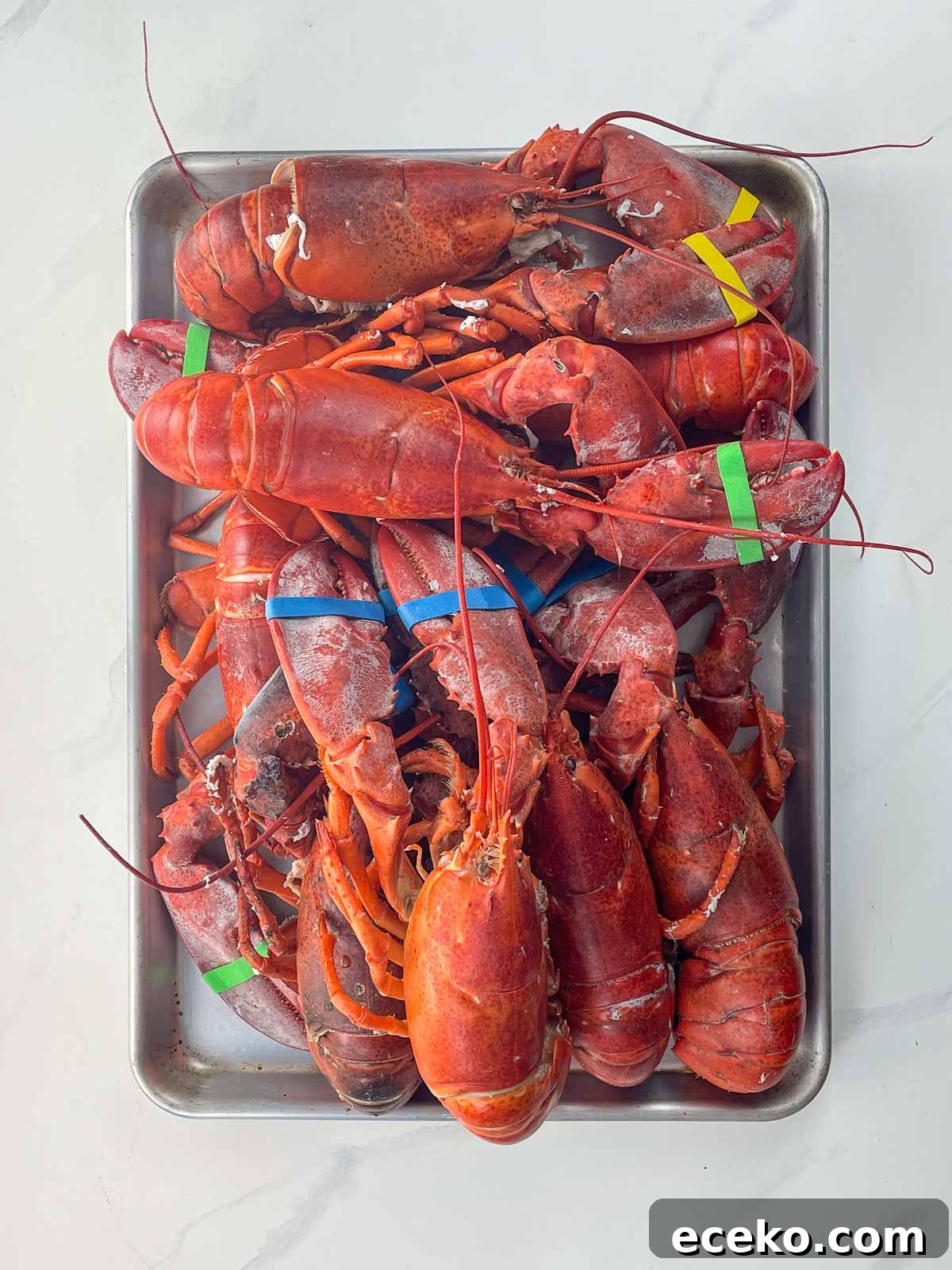
If you can, buy live lobsters from a dockside fish market. If you’re inland, a reputable local fishmonger or an overnight-shipping vendor that sources from dockside will do. Look for lively, active lobsters — lots of tail and claw movement is a good sign of health.
Hard shells vs. new shells (shedders)
Maine lobster season runs year-round with a peak in summer. You may encounter hard-shell lobsters and shedders (soft shells). Lobsters molt to grow, and soft shells are still firming up. Hard shells yield more meat per pound and a firmer, more robust texture. Soft shells are easier to pick but have less meat per pound and a lighter texture and flavor. Both are excellent — choose based on preference and availability.
What size lobster to buy
Lobsters are legally regulated by carapace length in Maine and are also sold by weight. Larger lobsters often cost more per pound. My preferred serving size is 1.75–2 pounds: generous but manageable, especially for hard shells. For large gatherings where cost is a concern, 1.25-pound lobsters are a good compromise.
Smaller lobsters are not inherently more tender — toughness usually results from overcooking rather than size.
| Name | Size |
| Chix or chickens | 1 pound |
| Quarters | 1 1/4 pounds |
| Halves | 1 1/2 pounds |
| Deuces | 2 pounds |
Male or female?
You can request females if you want coral (roe), which cooks to a beautiful red-orange color and is delicious to many. Females tend to have wider tails and softer, more translucent top swimmerets; males have firmer top swimmerets that point toward the body.
Choosing your own?
When selecting lobsters yourself, pick the liveliest ones. Active movement of the tail, legs, and claws indicates vibrancy and freshness.
Storing live lobster
Bring lobsters home in a paper bag or crate and plan to cook them the same day. Keep them in the coldest part of the refrigerator (usually the upper rear) until cooking; cooler temperatures help keep them sedated. If they arrive in plastic, leave the bag open or transfer them to a container that allows air circulation.
Cooking live lobster
There are several ways to cook lobster, but steaming gives a classic result with good control. Below are straightforward, reliable steps for steaming any size lobster.
Prepare the pot
Use a large pot with a tight-fitting lid so lobsters aren’t crowded. Recommended pot sizes:
| Lobsters | Pot size |
| 2 | 5-quart minimum — 8-quart ideal |
| 4 | 12-quart |
| 8 | 20-quart |
| 12 | 24-quart |
Fill the pot with about two inches of water. No need to salt it — lobsters contain natural salinity. Bring the water to a rapid boil over high heat.
Add lobsters one at a time, placing them head-first, and replace the lid immediately. Give the water a minute or two (up to about five in a very large pot) to return to a boil, then start timing.
Timing guideline: Cook for 8 minutes for the first pound, plus 3 minutes for each additional pound per lobster. Do not add up the total weight of all lobsters — time each according to the average size you’re cooking. For example, a 1.75-pound lobster cooks about 11 minutes total.
Cooked lobsters will have bright red shells and opaque, creamy-white meat with no translucence. Internal temperature near the tail should read 135–140°F if you choose to check.
A word on humane dispatch
There’s scientific debate about whether lobsters feel pain and what method is most humane. Two common approaches are:
- Place live lobsters head-first into a pot of rapidly boiling water (this is the method I use).
- Chill lobsters in the freezer for 10–15 minutes to sedate them, then make a quick, firm cut below the eyes with a chef’s knife before cooking.
How to eat a whole lobster
Step-by-step: gather tools, separate the tail and claws, eat the tail, pick the claws, extract leg meat, enjoy any coral and optionally the tomalley, and find the small nuggets in the body cavity. Read the detailed steps below or watch the video for a visual walkthrough.
- Gather your tools
- Separate the claws and the tail from the body
- Eat the tail
- Eat the claws
- Chew the meat from the spindly legs
- Eat any coral and, if you like, the tomalley
- Find and eat the nuggets of meat in the ribcage
If you want the full visual, here’s the full breakdown in a 24-minute video.
Prepare your tools
You’ll need metal lobster crackers (and a mallet for very hard shells), lobster picks, one or two large bowls for meat and shells, and towels or paper towels for each diner.
Separate the claws and tail from the body
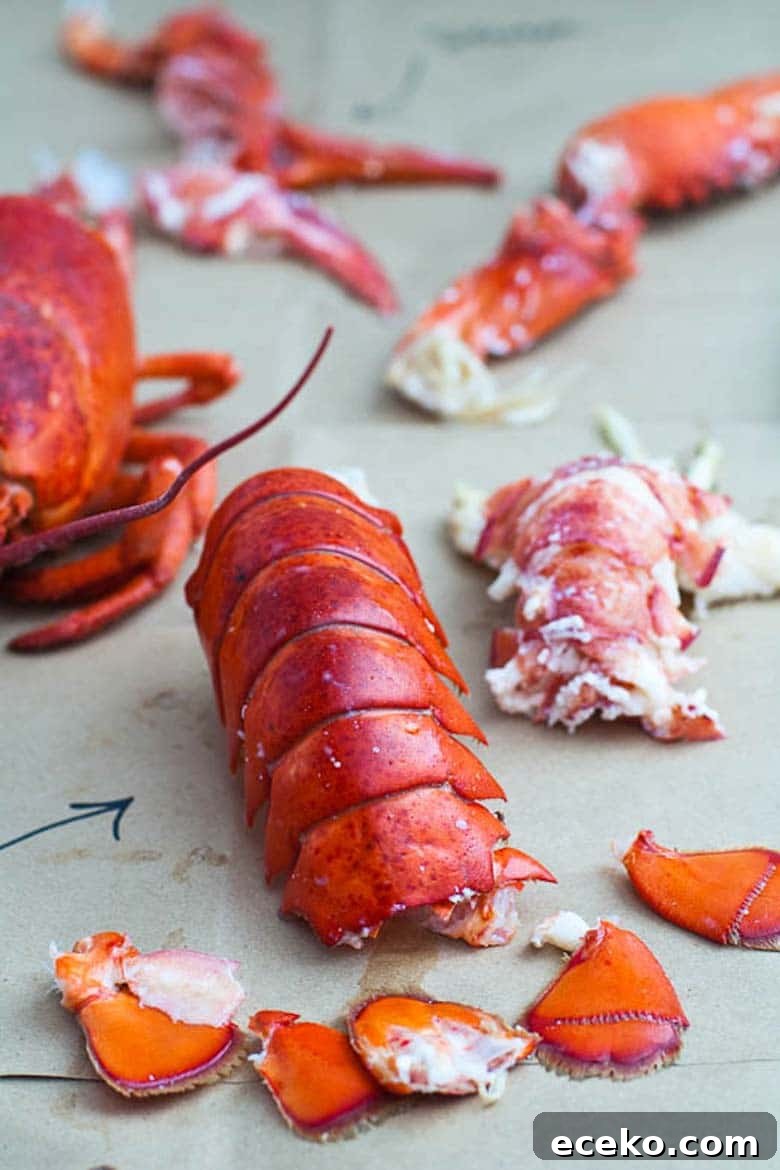
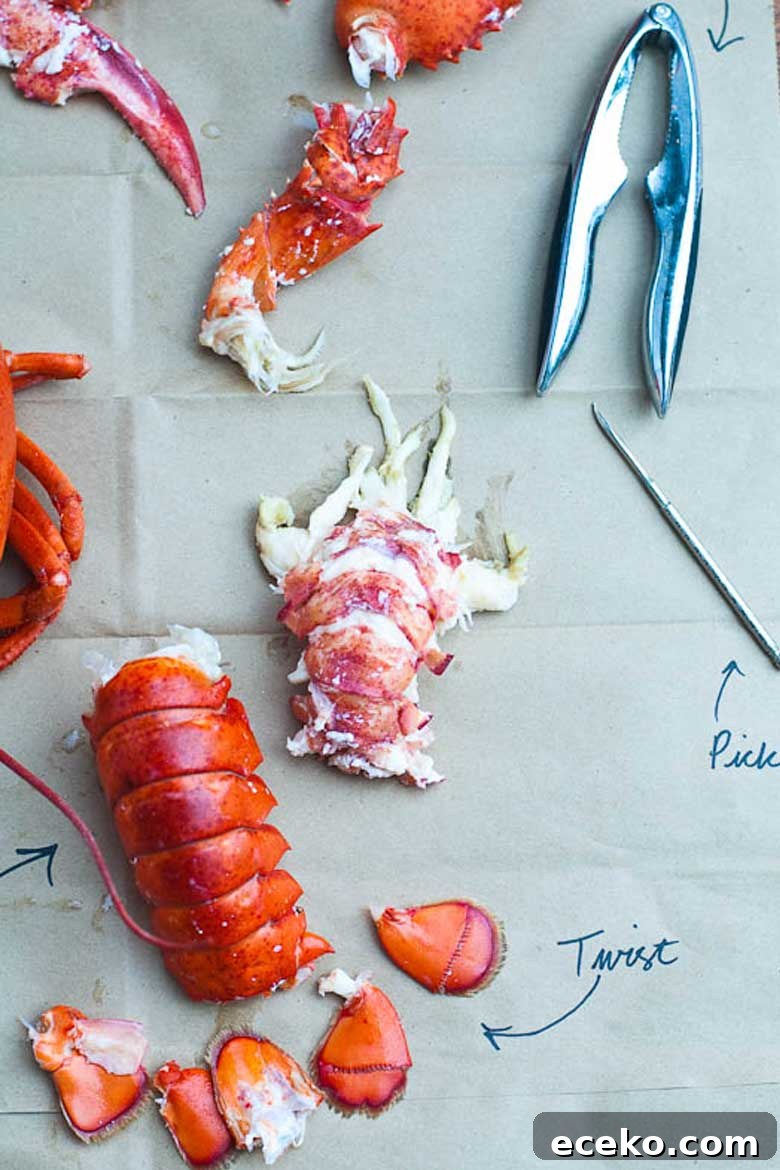
- Hold the tail with your dominant hand and the body with the other. Twist the tail away from the body to separate them, then place the tail on your plate.
- Twist off each claw with the knuckle (carpus) attached. You’ll now have a body, a tail, and two claws with arms.
Eat the tail
I like to eat the tail first. It’s easy and rewarding, and it primes you for the rest of the meal.
- Twist off the tail fins and bite or pull out the small pieces of meat inside them.
- Hold the tail lengthwise and split the shell down the back by prying the sides apart until it snaps. This straightens the tail for the next step.
- Push your thumb into the hole left by the fins and ease the meat out of the shell in one piece.
- Open the tail meat lengthwise and remove the dark vein (the digestive tract) running down the center, then dip the meat in lemon butter and enjoy.
You may notice some hemolymph (a soft white substance) between the meat and shell; it’s edible and flavorful.
Eat the claws
The cracker and pick are most useful here. A lobster has a crusher claw (larger, rounder) and a pincher claw (pointier). The crusher contains a flat piece of inedible cartilage that you should remove.
- Twist each claw away from the knuckles.
- Crack the shell with your crackers or mallet and open it to access the meat.
- Pull out the thumb-like section and remove any cartilage from the meat.
- Separate and crack the knuckle joints to push the meat out, using picks as needed.
Chew the meat from the spindly legs
Work through the body next.
- Twist off each spindly leg at the base and chew or use a pick to extract the meat from each joint, similar to eating edamame.
- Avoid any hairy-looking pieces — these are internal organs like lung, heart, or brain and should be discarded.
Eat any coral and, if you like, the tomalley
- Inside the body you may find greenish-brown tomalley (the lobster’s liver/pancreas) — rich and tender, but some avoid it for toxin concerns.
- You may also find orange-red coral (roe) in females; if it’s red and opaque it’s cooked and delicious. If the roe appears black or gelatinous it’s undercooked and can be reserved and finished in butter.
Open the body and find the little nuggets of meat
Some of the best bites are the small nuggets hidden in the body cavity and ribcage.
- Place both thumbs into the body cavity, hold back the cartilage gently with one thumb, and pry the shell off from the top, hinging at the head. Discard the shell.
- Remove and discard the head but check right behind it for a prized nugget of meat.
- There’s a honeycomb-like network of cartilage inside; open it gently and extract the small pieces of meat. Avoid any hairy-looking parts.
The video is particularly helpful for this section if you want to see the motions clearly.
That’s it!
Now you’ve got hands-on experience with cooking live lobster and eating a whole lobster. Enjoy the meal, clear up, and maybe take a quick shower afterward. Enjoy!
Expert tips and FAQs
You can steam lobsters up to 24 hours in advance. Cool them completely, store in airtight containers in the refrigerator, and reheat by plunging into boiling water or warming in a 350°F oven. I typically prefer to cook them just before serving.
Fully cooked lobster meat keeps in an airtight container in the fridge for up to three days. You can pick the meat before storing or refrigerate whole lobsters and pick later.
Yes — clean the shells and freeze them for stock later. Making lobster stock is similar to making chicken stock once you have the shells ready.
More lobster resources
- Maine lobster roll
- Connecticut-style lobster roll
- Lobster salad
- Butter-poached lobster tails
- Sous vide lobster tail
- How to make top-split buns
How to Cook a Live Lobster
Ingredients
- 4 live lobsters I recommend 1.75 to 2 pounds each
- 16 tablespoons (224 grams) cultured, salted butter
- ¼ cup (60 ml) freshly squeezed lemon juice
Instructions
- Fill a large pot with two inches of water. No need to salt. Cover and bring to a rolling boil.
- One by one, place lobsters head-first into the pot with elastic bands on their claws. Work quickly and replace the lid.
- Allow the water to return to a boil, then set a timer: 8 minutes for the first pound plus 3 minutes for each additional pound (per lobster). For 1.75-pound lobsters, cook about 11 minutes.
- If cooking a large batch, you may open the lid halfway through and rearrange lobsters for even cooking.
- When done, remove lobsters with tongs, place on a tray or plates, and let cool at least five minutes.
- While lobsters cool, melt the butter over medium-low heat in a small pot. Keep the milk solids — they add flavor.
- Off the heat, whisk in the lemon juice and serve the lemon butter in ramekins alongside each lobster.
Notes
- Choose a pot that won’t crowd the lobsters. Recommended sizes: 2 lobsters — 5–8 quarts; 4 lobsters — 12 quarts; 8 lobsters — 20 quarts; 12 lobsters — 24 quarts.
- Two common humane dispatch methods: place lobsters head-first into rapidly boiling water, or chill them in the freezer for 10–15 minutes and then make a quick cut below the eyes before cooking. Choose the approach you are comfortable with.
- Cook shortly before serving when possible. You can steam lobsters up to 24 hours ahead, cool completely, and refrigerate in airtight containers. Reheat by boiling briefly or in a 350°F oven.
- Leftovers keep in the fridge for up to three days in an airtight container. You may pick the meat before storing or store whole lobsters and pick later.
- Save cleaned shells in the freezer for making lobster stock later.
Nutrition
Nutrition information is an approximation.
Additional Info
Tried this recipe?Mention @umamigirl or tag #umamigirl!