With the right technique, cutting and de-seeding a pomegranate can be straightforward and tidy. This guide explains simple, reliable methods for how to cut and de-seed a pomegranate, so you can remove the seeds with minimal effort and mess while preserving as many arils as possible.
Pomegranates are prized for their bright ruby arils and sweet-tart flavor, but getting to those jewel-like seeds can feel intimidating. If you’ve ever hesitated because you feared splattered juice or bruised seeds, the methods below will help you tackle a pomegranate confidently and cleanly.
How Do You Eat Pomegranates?
Pomegranate arils are versatile and delicious on their own or as an addition to many dishes. Eat the seeds fresh as a snack, sprinkle them on salads for a crunchy burst, fold them into yogurt or oatmeal, or garnish desserts. They also work well in smoothies and savory preparations. Beyond flavor, pomegranate seeds provide antioxidants, fiber, vitamins, and potassium, making them a nutritious addition to meals.
The Best Time to Buy Pomegranates
Pomegranate season typically runs from September through January, peaking in autumn. Choose fruits that feel heavy for their size—this usually means a juicy interior. Look for vibrant red skin with no large blemishes or soft spots. Avoid dull, shriveled fruits, which may be past their prime.
Tools You’ll Need to De-Seed A Pomegranate
- Sharp knife
- Cutting board
- Large bowl
- Water (optional)
- Heavy spoon (wood or metal)
Method 1: The Traditional Water Bath Technique (My Go-To)
This water-bath method is reliable and helps keep juice and stains under control. It’s a favorite because it minimizes bruising and collects pith separately for easy cleanup.
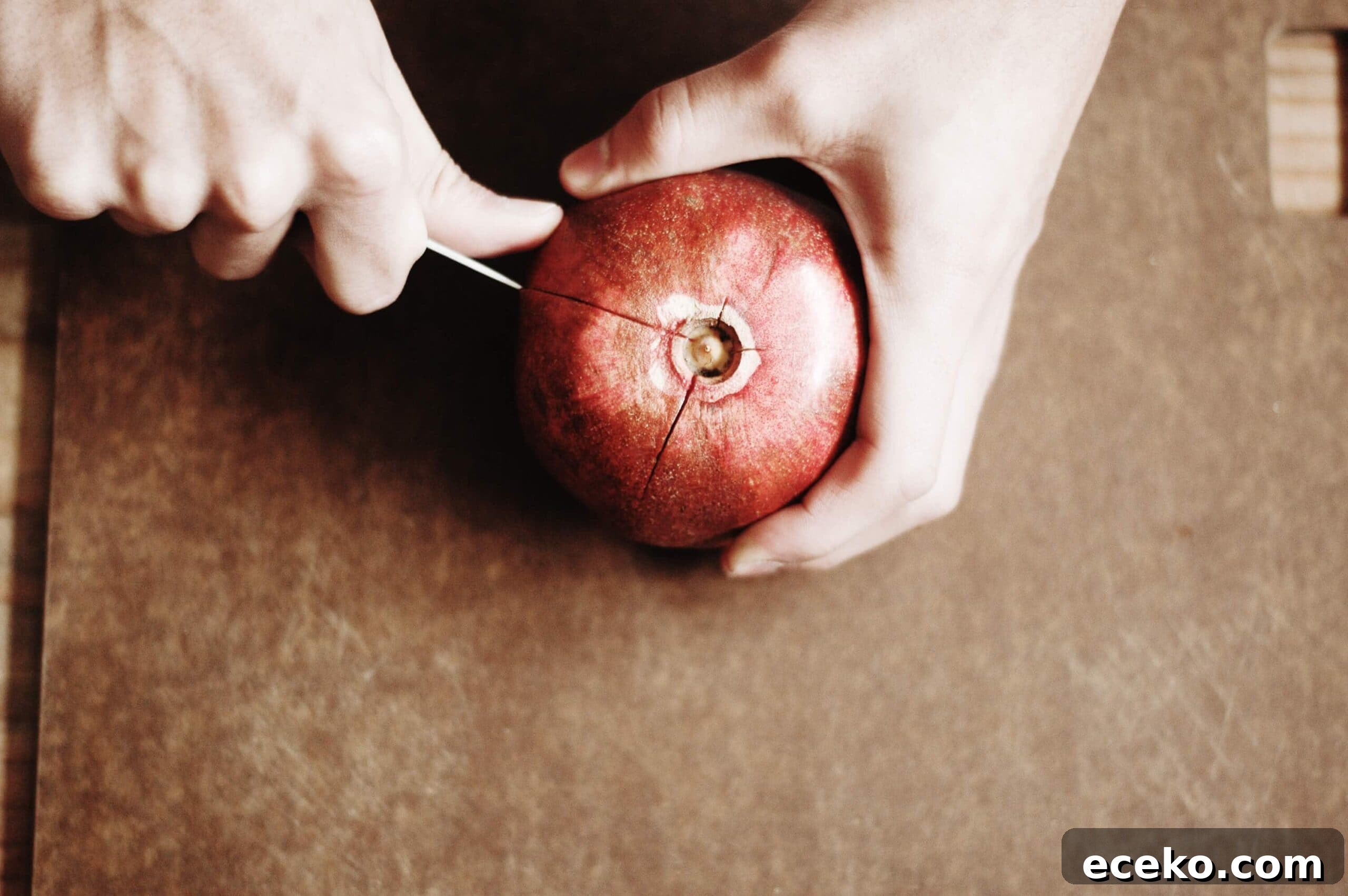
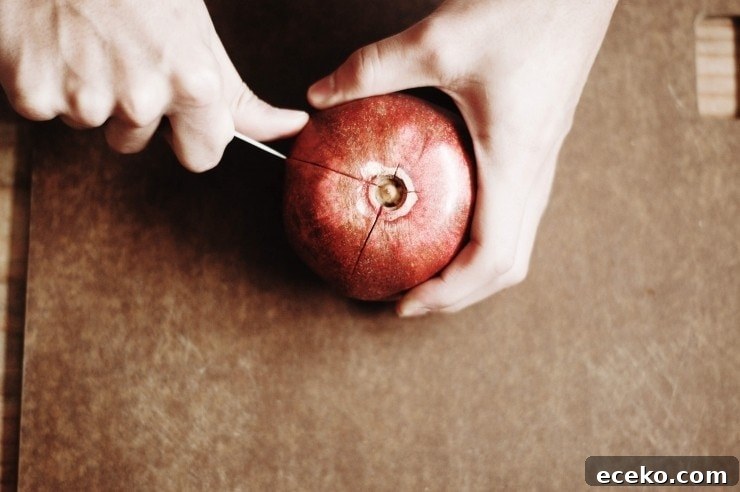
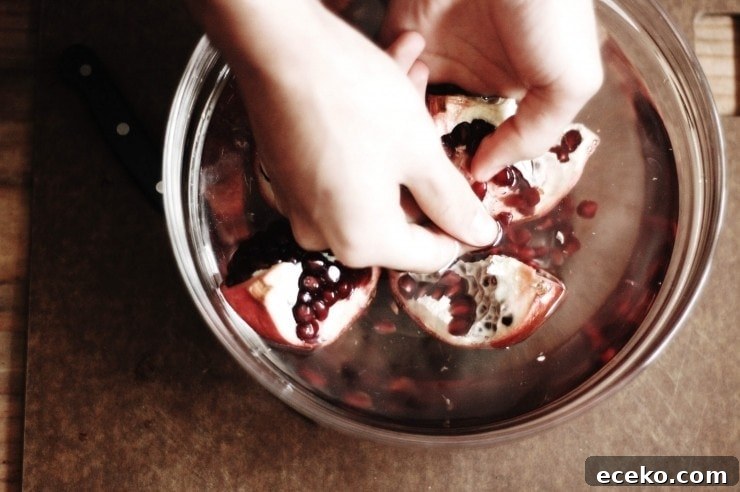
- Cut and score: Fill a large bowl with cold water. Slice the crown off the pomegranate, then score the skin from top to bottom into four (or more) sections. Cut only the skin—avoid slicing deeply into the seeds.
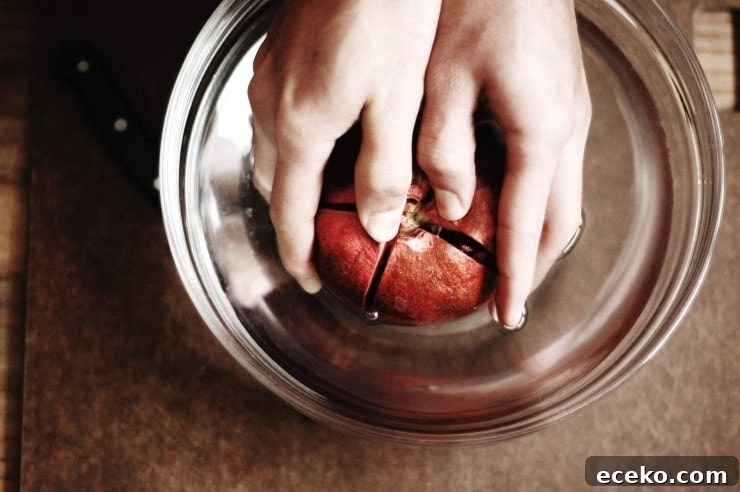
- Submerge and separate: Place the scored fruit in the bowl and work under the water to separate the sections. The water helps contain juice and prevents splatter.
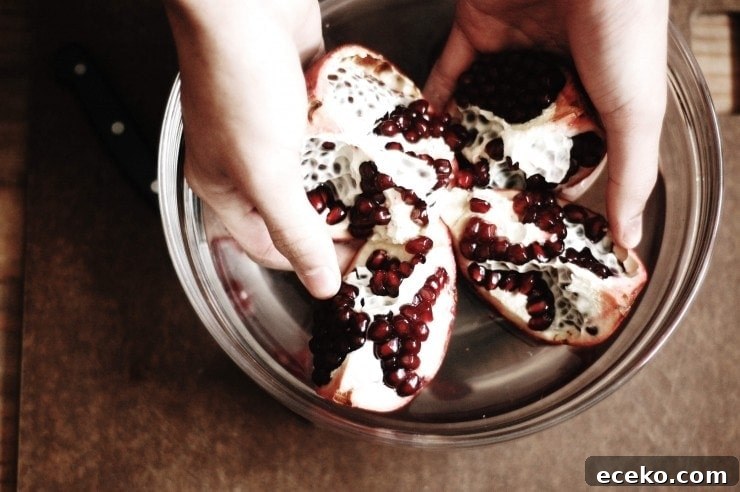
- Remove the seeds: Working with one section at a time under the water, use your thumb to loosen the arils from the membrane. Repeat for each section.
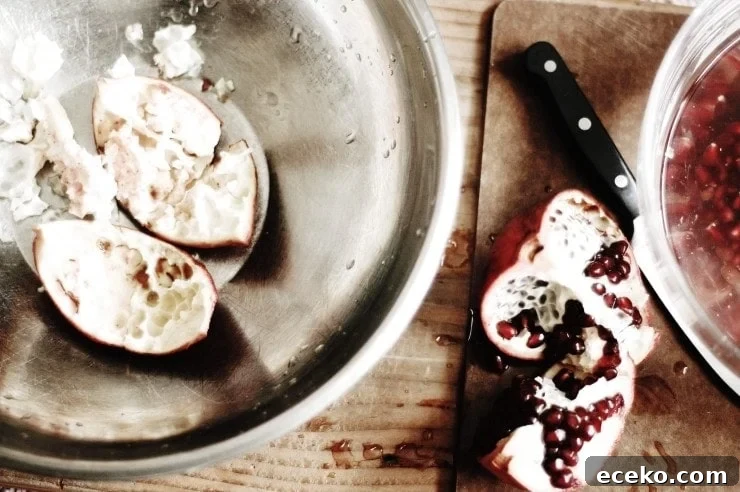
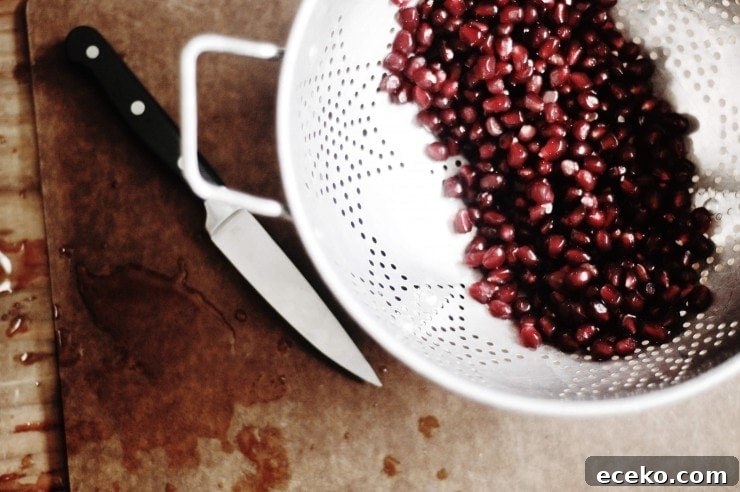
- Clean and store: The white pith will float while the seeds sink. Skim away the pith, drain the seeds in a colander, rinse briefly, pat dry, and store in an airtight container in the refrigerator for up to five days.
Method 2: The Easy Cut & Pry Technique
If you prefer a dry method with more control, the cut-and-pry approach works well. It can be slightly messier than the water method but gives a hands-on feel for releasing seeds cleanly.
- Top and score: Remove the crown and make shallow, lengthwise cuts along the ridges (four to six cuts depending on the fruit).
- Open and pry: Gently pry the pomegranate open along the scored lines so it splits into sections.
- Release the seeds: Run your thumb along the seeds to push them out into a bowl. Remove any bits of white pith as you go.
Method 3: The Spoon Method
When you need seeds quickly and don’t mind a bit of mess, the spoon-whack method is fast and effective. Do this over a bowl in the sink and avoid wearing light clothing.
- Halve the pomegranate: Slice the fruit horizontally.
- Whack: Hold a half seed-side down over a bowl and strike the outer rind firmly with the back of a wooden or metal spoon. Rotate and repeat until most seeds fall out.
- Finish and store: Remove any remaining seeds by hand, discard pith, rinse seeds if desired, and store as directed above.
Tips and Tricks
- Room temperature: Pomegranates are easier to work with at room temperature; let cold fruit sit briefly before handling.
- Avoid stains: Lay down a towel or peel in the sink or a large bowl to protect clothing and counters. An apron helps, too.
How to Use Pomegranate Seeds
Pomegranate seeds brighten many dishes. Add them to salads, yogurt, oatmeal, or desserts for color and crunch. Blend them into smoothies, press them for fresh juice, or reduce the juice into pomegranate molasses for savory applications. They also make a vibrant garnish for both sweet and savory plates.
Frequently Asked Questions (FAQ)
Ripe pomegranates have smooth, firm skin, feel heavy for their size, and display a deep red or maroon color.
Yes. The arils and their tiny inner seeds are edible; the inner seed adds a pleasant crunch.
Pat seeds dry and store them in an airtight container in the refrigerator for up to five days.
Yes. Freeze seeds in a single layer on a baking sheet until solid, then transfer to a freezer-safe bag or container. They keep up to six months and can be used frozen in recipes.
With these easy methods, de-seeding a pomegranate becomes quick and manageable. Whether you choose the water bath, cut-and-pry, or spoon method, you’ll be rewarded with bright, flavorful arils ready to enjoy.
Other Posts You Will Enjoy
Explore more how-to content and kitchen tips in our archives for additional simple techniques and recipes.
- Pistachio, Mint, & Spice Crusted Lamb Chops
- Quick Puff Pastry Recipe
- The Best Cocoa Brownies
- Lemon and Herb Roasted Chicken
- How to Quickly Bring Eggs to Room Temperature