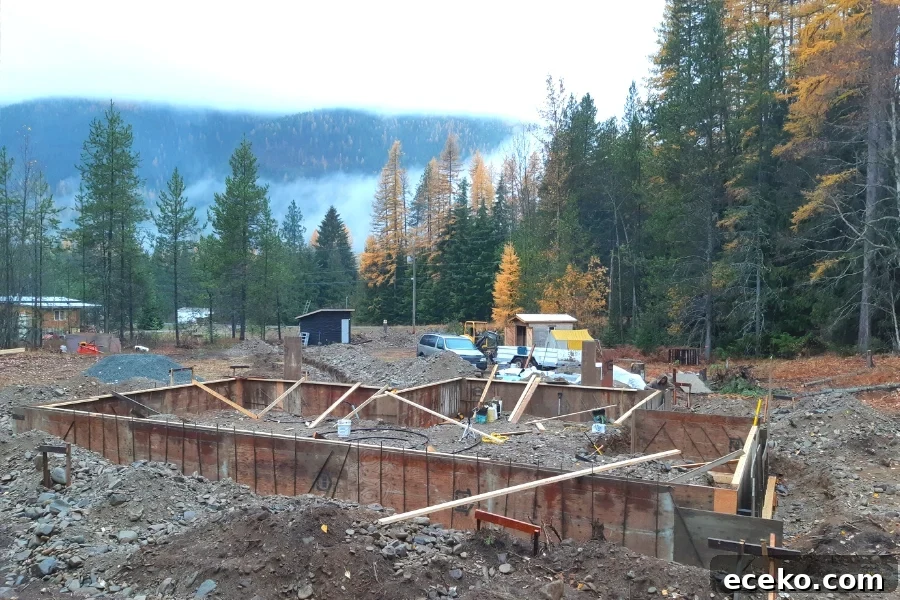
Finally, the land sale was signed and the mortgage papers were completed. We were committed with no turning back. It was time to get to work, and together we began taming the wild parcel we’d purchased.
Clearing and Preparing the Land
Although the previous owner had cleared a build site, there were still many trees that needed removal.
Tall pines blocked the access route for power, and a small grove of large mountain cottonwoods stood just behind the house site. I wanted to keep the old cottonwoods, but the risk was too great—one strong wind could send them crashing into the house. They had to be removed before construction began.
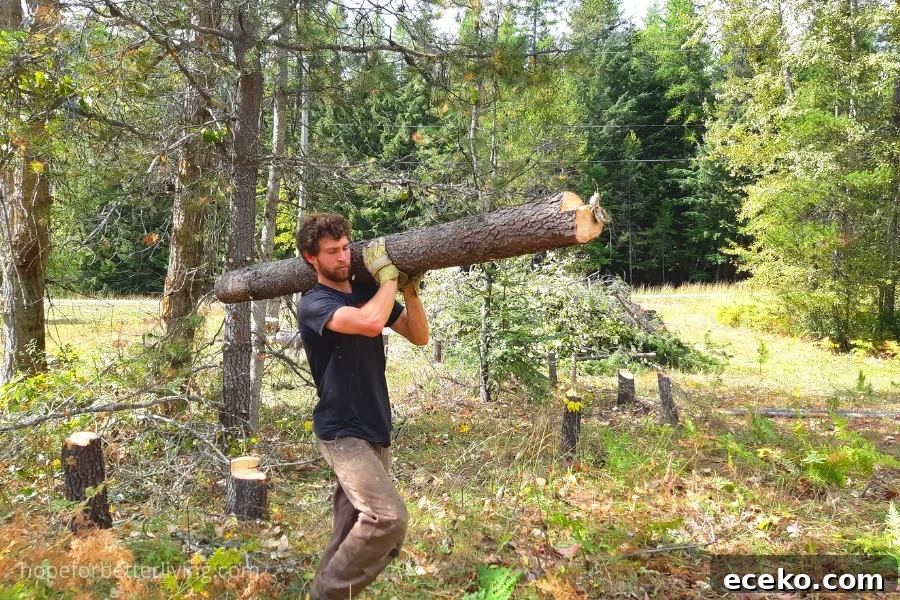
My partner had requested time off work, but it was still four weeks away, so we worked the land on weekends. Without heavy equipment, clearing was grueling. We felled pines with a Husqvarna chainsaw, hauled limbs by hand into huge burn piles, and cut logs into short lengths to stack around the property.
Fortunately, my parents were passing through and my father, an experienced logger, agreed to take down the large cottonwoods for us.
One by one the trees came down, leaving a wide gap between our property and the northern neighbor. The trunks were so large we had to leave them until we could rent equipment to move them.
Finally my partner’s time off began. Weekends of hard work were over—now every day was long and demanding. I wanted to help as much as I could, but keeping up with his pace was difficult. Instead, I contributed where I could.
Deciding On Living Accommodations
At the time we were still renting a large house in town, but we didn’t want to pay rent and a mortgage. After discussing options, we decided to move onto the property before the house was finished.
Once power was installed, we planned to spend the winter in an 8×12 power shed. It was small, but functional for two people: a small electric heater would provide warmth, the frost-free hydrant stood just outside the door, and we’d already installed an outhouse. For nighttime or bitterly cold spells we could use a slop bucket.
We would pioneer life on our land and make memories to tell our future children.
Playing the Waiting Game
A neighbor rented us equipment to grub stumps and level the building site. We built the power shed as soon as we could. Its tiny frame made us laugh—neither of us could imagine living in something so small—yet we pressed on.
We covered the walls with tar paper, shingled the roof, and insulated the narrow walls. Then we waited for power. The nights were too cold without heat, and a small wood stove would have overheated the tiny space.
Waiting became a constant theme: waiting for the power company, for percolation tests, for building supplies, and for bureaucratic processes like land sales and mortgages. Sometimes we waited patiently; other times we were anything but patient. Still, progress continued, slowly but surely.
Racing Winter Temperatures
With winter approaching, our pace increased. Footings were dug, and underground electrical work was completed by my partner and his dad, who made a long, dedicated trip to help. A friend lent concrete forms, and with the help of a brother we poured footings and walls.
We had to level the house center, pack it with gravel, insulate, tie rebar and run in-floor heating lines before the concrete slab could be poured. Evening temperatures dropped steadily and the first frost arrived along with light snow.
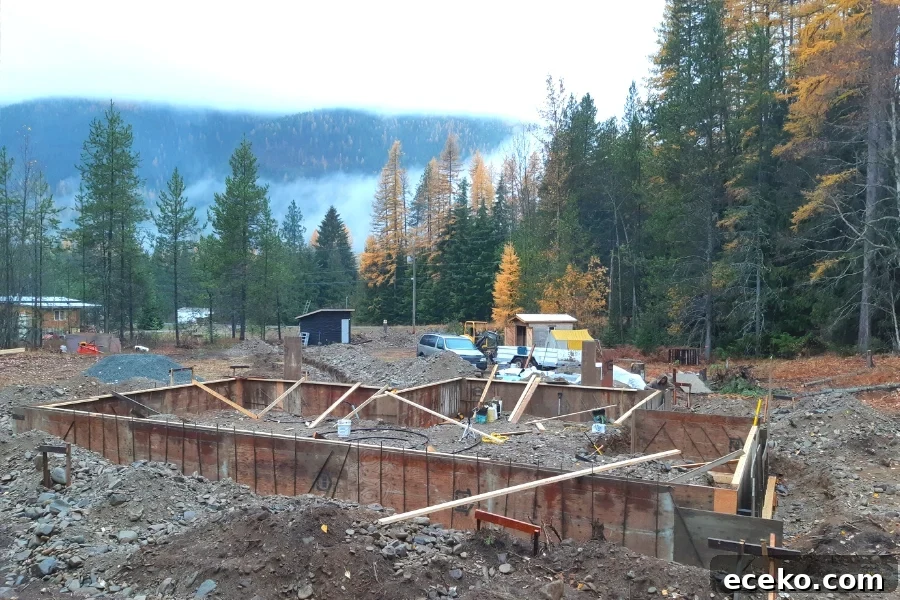
We monitored weather forecasts closely—if we were to pour the slab that winter we needed a three-day warm spell. Those days were a blur: friends and family helped, nights were long, and exhaustion set in, but quitting wasn’t an option.
When a three-day warm window appeared in the forecast, we seized it.
Preparing for the Final Concrete Pour
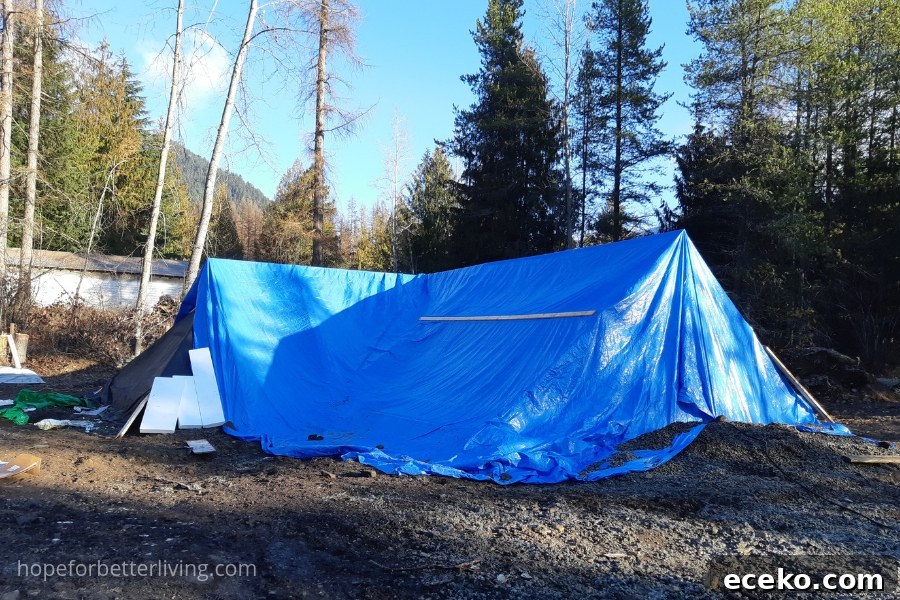
We ordered two truckloads of concrete with an accelerator in the mix and recruited extra help. An A-frame was built over the foundation and covered with a 40×60 tarp to create a warmed enclosure for proper curing with heaters.
The night before the pour we worked late. The white Styrofoam insulation reflected light and made the dark worksite feel oddly bright. We finished fastening the in-floor water lines to the rebar, but progress felt slow. Exhaustion set in—I crawled in a dusting of snow fastening wire ties with numb fingers while my partner accidentally cut his finger. Blood stained the white insulation and snow, but we pressed on.
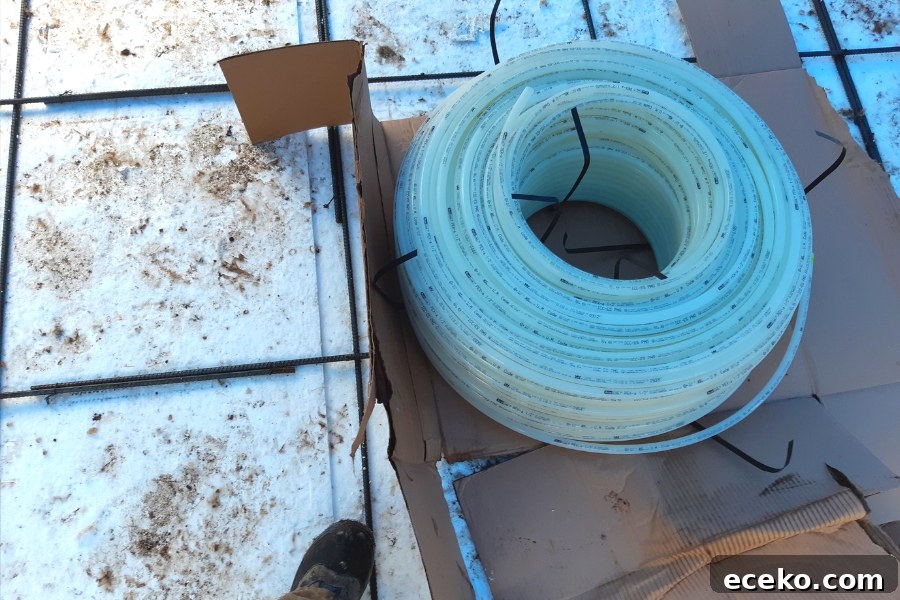
Concrete arrived at 7:30 a.m. the next morning, so all prep had to be finished that night. We completed the work, packed up, and finally crawled into the van exhausted. It was after 8 p.m. when we got home; I skipped dinner and a shower, collapsed into bed, and slept like the dead.
Click to read part 9