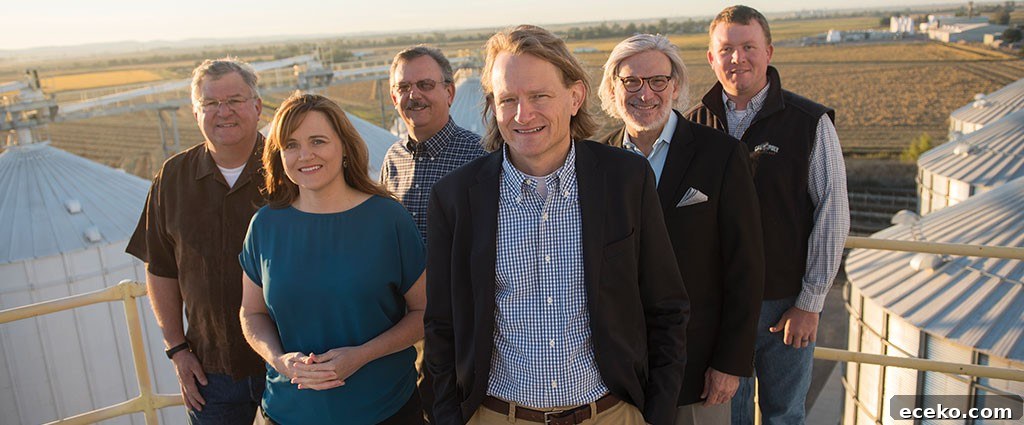
In 1937, Albert and Frances Lundberg left their cattle and grain farm in Nebraska and moved west to California. The Dust Bowl had devastated the prairies, and like many neighbors they sought a more stable place to farm and raise their four sons. Settling in Richvale, they began cultivating rice, a crop grown in the region since 1912. What set them apart from many new neighbors was a deep appreciation for soil health.
“My grandparents, my dad and his brothers came out of the Dust Bowl experience seeing the value of soil and what can happen when it’s not taken care of. It made them think it’s important to take care of the soil for the future, and if you don’t tend or sustain it, it can be depleted or fall apart,” says Grant Lundberg, CEO of Lundberg Family Farms. His father, Eldon, was the eldest of Albert and Frances’s four boys.
The Lundbergs adopted chemical-free methods and soil-supporting practices long before organic farming became mainstream. When asked to produce organic brown rice in the late 1960s, they were able to do so, cementing a path that would define the company. Today they are recognized globally for their rice products.
“Our neighbors thought we were crazy, because we didn’t burn the crop residue or use pesticides. My grandparents were following values and convictions that were counter to what their neighbors thought was the way to farm,” Lundberg explains. He grew up on the farm helping his father irrigate and drive a tractor, learning those family principles firsthand.
Those values—prioritizing practices that benefit both people and the planet—have been passed down through generations. Lundberg says the family’s commitment to stewardship gave subsequent generations the confidence to stand by their choices, even when they ran counter to prevailing practices.
“In good or bad times, it has given us a sense of what is important,” he adds.
Soil health is increasingly important today. As research and public awareness grow about organic farming’s potential to mitigate climate change—by sequestering carbon dioxide in healthy soils—more consumers are seeking organic options.
“That idea is winning over consumers. Once people understand the positive impact it has on the planet and health, they want to make that purchase,” Lundberg says.
The COVID-19 pandemic also shifted attention toward food and health. “The pandemic has reinforced the value of healthy food. More people are spending time cooking and seeing the importance of their food supply. That reinforces the idea that this is really essential to our society. It’s a great opportunity to get people to prioritize what is important in their lives, and food is one of those pieces,” Lundberg notes. He hopes that increased awareness and demand for organic products will lead to more land being farmed organically across the country, continuing the cycle of healthy soil, a healthier planet, and healthier people.