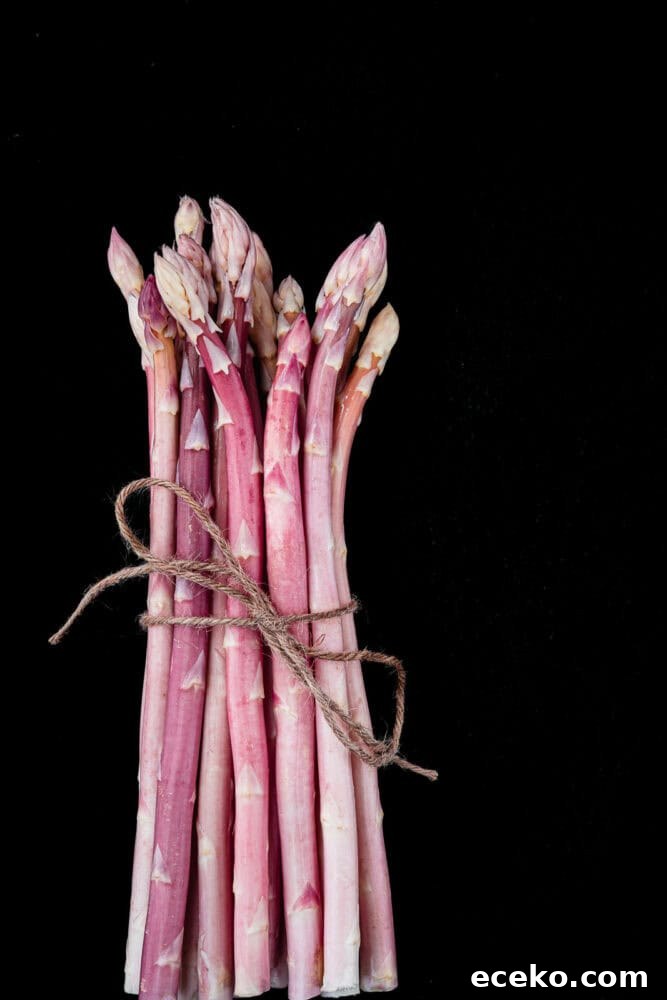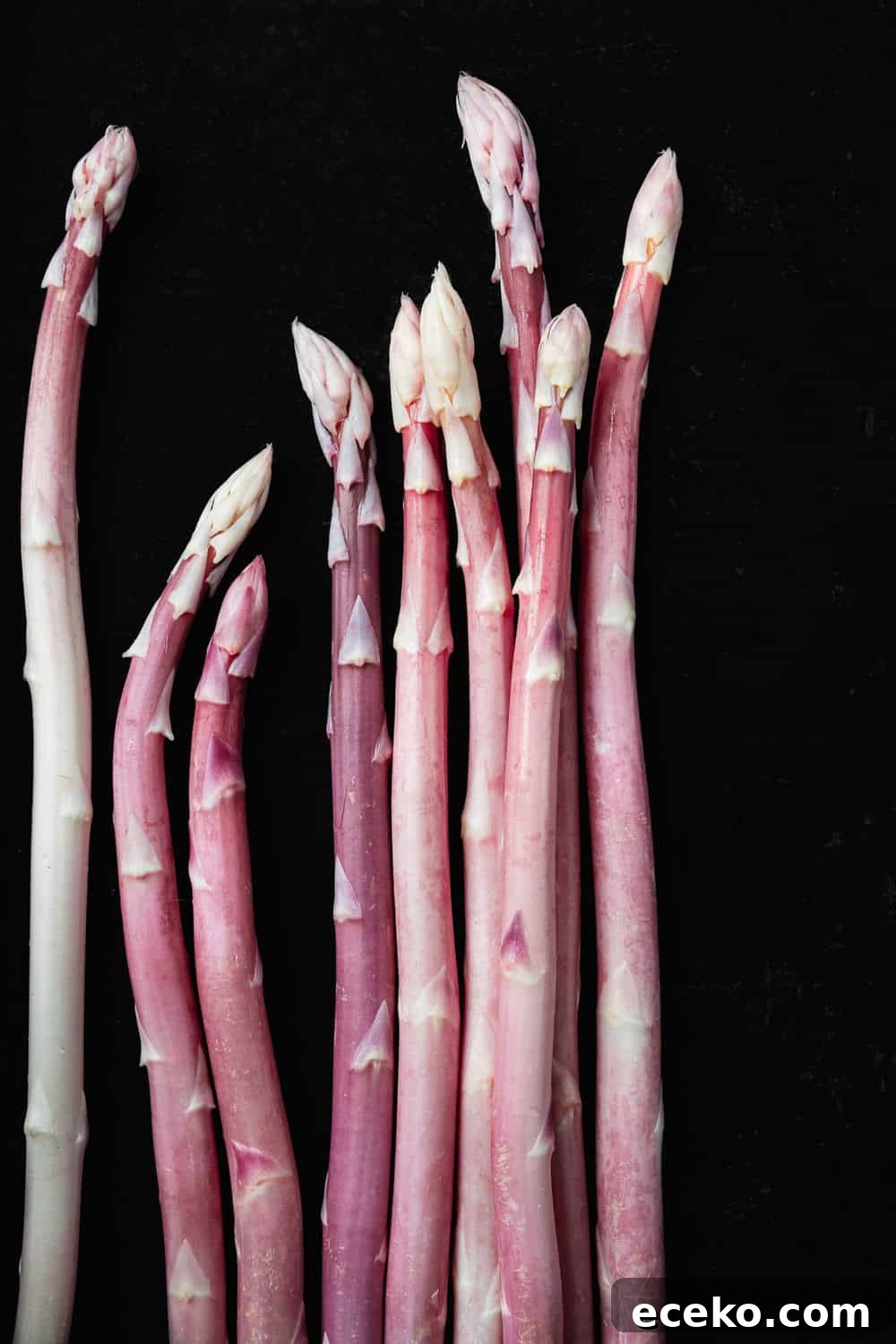
Green asparagus – the classic. White asparagus (grown in the dark). Purple asparagus (a separate, anthocyanin-rich variety). And then there is pink asparagus.
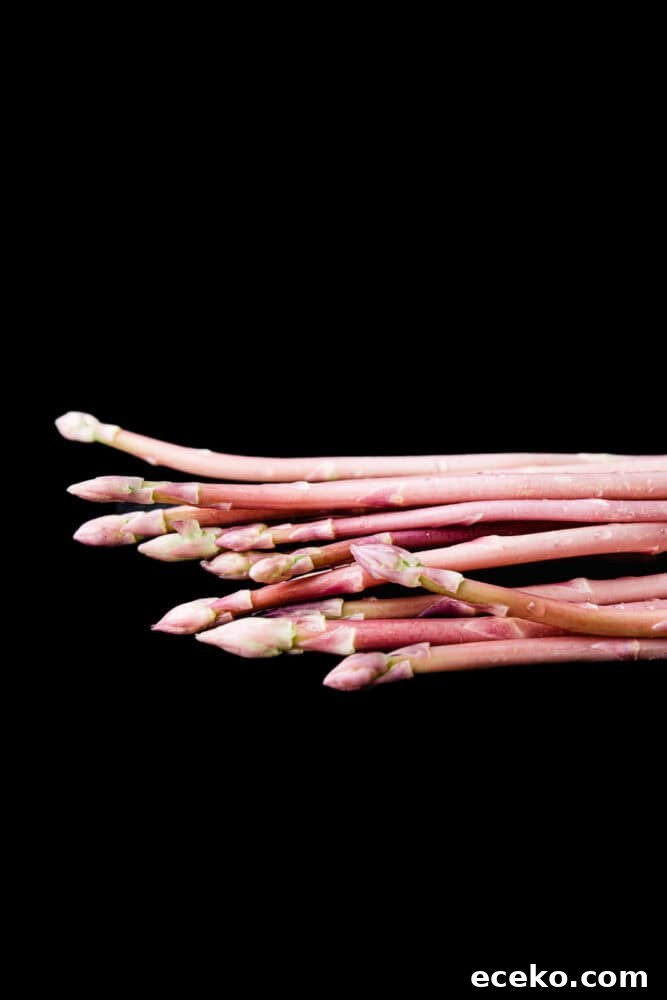
Meet pink asparagus: a sweeter, more tender sibling of green asparagus and the rarest asparagus color of them all.
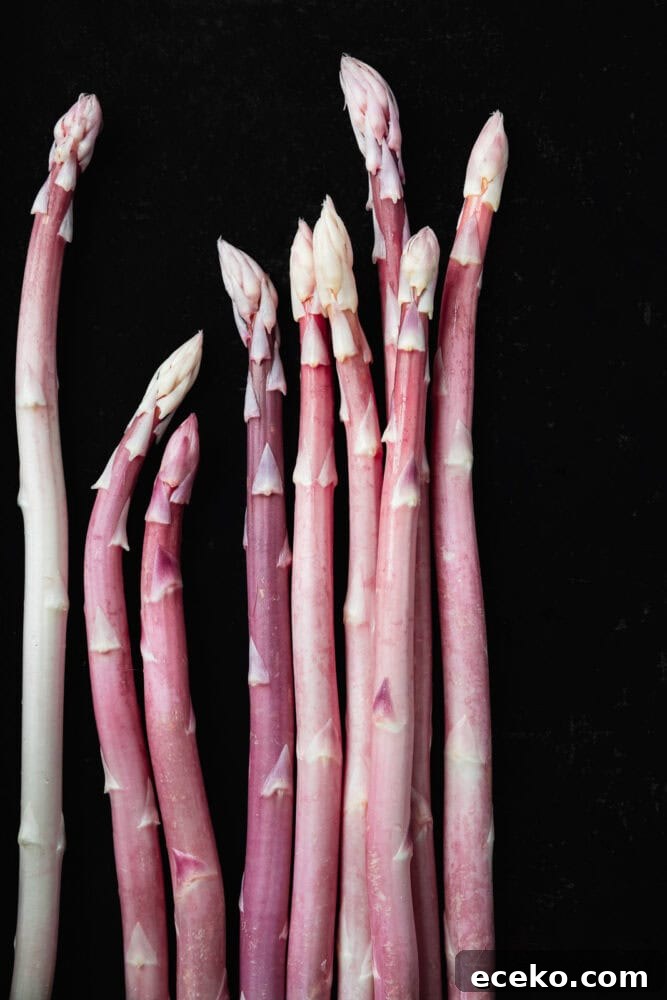
What is Pink Asparagus?
Pink asparagus describes spears that develop a natural pink hue. This blush can result from a distinct cultivar like the Italian Asparagus Rosa, or from the specific way the spears are grown and exposed to light. In many cases, pink emerges when shoots that would otherwise remain white are given a brief touch of light just before harvest. That light stimulates anthocyanins, the plant pigments responsible for the soft, blushing color.
The process is closely related to how white and green asparagus are produced: white asparagus are kept completely covered and grown without sunlight so chlorophyll does not develop; green asparagus are exposed to full sun and become green from chlorophyll. Pink asparagus sits between those two extremes—partially shielded from light, then briefly exposed—so it develops anthocyanins without the full chlorophyll intensity of green spears.
In some instances, a pink tone can also appear from slight oxidation of white asparagus once it is harvested. Either way, pink asparagus stands out for its delicate color and subtle sweetness, making it a memorable spring treat.
Pink spears are uncommon in most markets, which is part of their charm. They are prized by chefs and home cooks for both their flavor and their visual appeal.
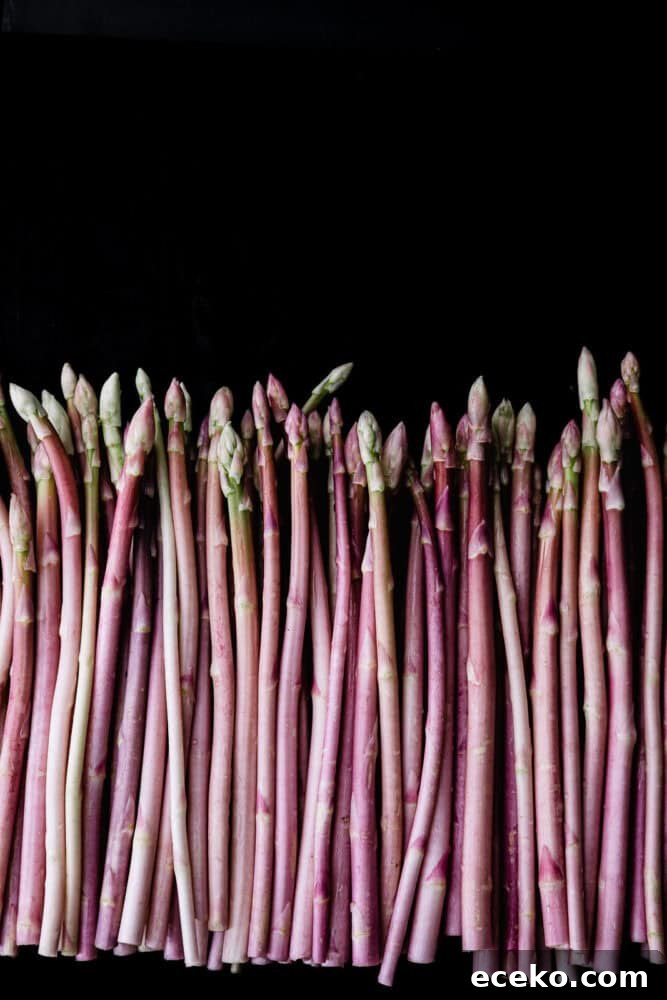
Cooking with Pink Asparagus
In flavor and texture, pink asparagus most closely resembles white asparagus: mild, slightly sweet, and less grassy than green. However, the spears are generally tender like green asparagus and usually do not require peeling. The combination of a delicate texture and subtle sweetness makes pink asparagus especially appealing for simple preparations that highlight the vegetable itself.
A practical note: the pink color is heat-sensitive. Anthocyanins that create the blush change color with warmth, so you should expect the pink to fade and shift toward green when cooked. To preserve as much of the color and fresh flavor as possible, minimize cooking time.
Here are some easy techniques to enjoy pink asparagus while preserving its qualities:
– Serve raw, shaved thin into salads or layered as a vegetable carpaccio tossed with olive oil, lemon juice, flaky salt, and fresh herbs.
– Blanch briefly—just until tender-crisp—then shock in ice water to preserve texture and slow color changes. Add a squeeze of lemon or a dash of vinegar to help maintain brightness.
– Quick-pickling is excellent for retaining color and lending a bright, acidic contrast to the sweetness of the spears.
– For a warmed preparation, roast, sear, or grill briefly at high heat to develop a bit of char without prolonged cooking; this will change the color but brings out a nutty depth and caramelized notes.
All four asparagus colors—green, white, purple, and pink—are interchangeable in recipes, but pink asparagus is worth seeking out for its unique combination of flavor and visual appeal. If you find it at a farmers market, bring some home and experiment: raw, lightly dressed, quick-pickled, or briefly grilled all work beautifully.
To select and store pink asparagus: choose firm, straight spears with closed tips and avoid limp or slimy stems. Store spears upright in a jar with a little water at the bottom or wrapped in a damp towel inside the refrigerator to keep them fresh for a few days. Use them while they are bright and firm for the best taste and texture.
More Pink Produce
If pink asparagus caught your eye, there are other pink fruits and vegetables worth exploring. Pink-hued produce adds visual interest to the plate and can offer subtly different flavor profiles:
- Pink Pineapple — an engineered, lycopene-rich variety known for its pale pink flesh.
- Pink Apples — varieties whose flesh shows a pink tint, making for striking slices in salads and desserts.
- Pink Lemons — slightly sweeter and more delicate than classic yellow lemons, useful for bright dressings and drinks.
- Pink Oyster Mushrooms — vibrant, hot-pink mushrooms that make a dramatic, savory addition to many dishes.
- Pink Garlic — garlic bulbs with rosy-hued skins and a milder, slightly sweeter flavor.
If you get your hands on pink asparagus, share what you make: tag @danielagerson on Instagram to show off your finds and preparations.
There’s a wide world of colorful fruits and vegetables to discover. Let pink asparagus be an invitation to bring more color, flavor, and playfulness into your cooking.
Let’s make waves in the kitchen.