
Eating out while following a migraine diet can be difficult because many restaurants use additives, flavor enhancers, and ingredients like MSG. The safest route is fresh, simple food where you know every ingredient, which often means cooking at home more. Still, I understand that sometimes you need a quick, easy meal and don’t have the energy to prepare food.
Restaurants are becoming more transparent about ingredients, which helps. Below are practical tips and specific menu ideas for dining out with migraine diet modifications. Eating out is never completely risk‑free — you may not always be able to verify everything — but occasional meals out usually won’t derail your progress.
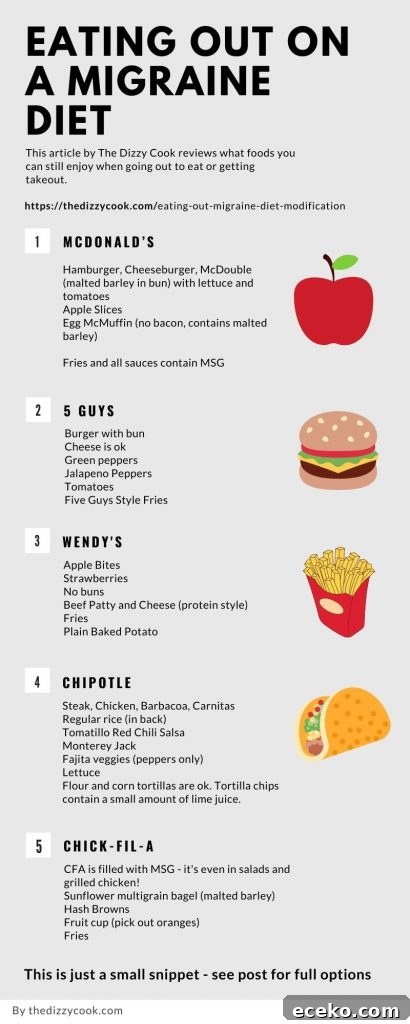
Migraine Diet Fast Food Options
I reviewed restaurant ingredient postings (as of August 2020) and listed items that are generally safer ingredient‑wise. Restaurants change suppliers, so always double check when possible. Some items include malted barley; if you are highly sensitive, ask for a lettuce wrap or “protein‑style” option. For occasional quick meals, the items below are typically okay for many people.
McDonald’s
- Hamburger, Cheeseburger, McDouble (buns contain malted barley) — order with lettuce and tomato if tolerated
- Apple slices
- Egg McMuffin (no bacon; contains malted barley)
- Avoid: Quarter Pounder, sesame buns, fries, chicken items, and sauces
Burger King
- Whopper and hamburger beef patties
- Lettuce
- Tomatoes (if tolerated)
- Cucumbers
- Avoid specialty buns like sesame seed if sensitive
Five Guys
- Burger with bun (or order lettuce‑wrapped)
- Cheese is generally okay
- Lettuce, green peppers, jalapeño peppers
- Tomatoes (if tolerated)
- Five Guys style fries
Taco Bell
- Hash browns
- Nacho chips (no sauce)
- Plain shells — essentially just the shell without added sauces or seasonings
Wendy’s
Many Wendy’s buns and prepared items include additives, so consider skipping typical bun options and choose simpler items instead.
- Apple bites
- Strawberries
- Beef patty and cheese (protein style)
- Fries
- Plain baked potato
Chipotle
Chipotle is one of the more transparent fast casual chains and can work well for a migraine diet when you choose carefully.
- Steak, chicken, barbacoa, carnitas
- Regular white rice
- Tomatillo red chili salsa
- Cheese
- Fajita veggies (peppers)
- Lettuce
- Flour and corn tortillas are usually acceptable; tortilla chips contain a small amount of lime juice
Chick‑fil‑A
Chick‑fil‑A uses many ingredients and seasonings that can include added flavor enhancers. If you miss their sauce, consider making a homemade version. Safer items to consider:
- Sunflower multigrain bagel (contains malted barley)
- Hash browns
- Fruit cup (remove oranges if those are problematic)
- Fries
Starbucks and Coffee Shops
Starbucks has limited migraine‑friendly options. Plain oatmeal is a reasonable choice; some locations offer hearty blueberry oatmeal from which you can remove unwanted toppings. Mint Majesty tea is a safe hot drink option. Some readers get steamed milk with cinnamon. At independent coffee shops you might find turmeric or golden milk lattes (turmeric, honey, warm milk) or caffeine‑free herbal teas like peppermint, ginger, and rooibos.
If traveling, plain bagels and plain cream cheese (for example at airport shops) can serve as a quick option, but note some bagels contain malted barley.
Migraine‑Friendly Restaurant Options
Local restaurants often offer the best opportunities to accommodate migraine diet needs. They tend to use fresher ingredients and are usually more willing to customize orders. When you order, explain you have food sensitivities; if a specific food reliably causes a severe reaction, say “allergy” so staff take extra care. Focus your questions on seasonings and any unlisted ingredients added during preparation.
A Note on Chicken and Butter
Some suppliers inject chicken with broth solutions and some lower‑cost butters include “natural flavors.” Both can contain ingredients that act like MSG. If you are extremely sensitive, ask about injected solutions or brand of butter. For many people who eat out occasionally, small amounts are tolerated, but be aware if you need to be strict.
Mexican
Onions and citrus are common triggers at Mexican restaurants, but many locations use simple, fresh tortillas and minimal ingredients. Opt for veggie fajitas without onions (mixed grilled peppers), grilled beef without seasonings, quesadillas with young cheeses like Oaxaca or Monterey Jack, or quesadillas with spinach, corn, and peppers. Avoid aged cheeses like cheddar or cotija. White queso can be variable — always double check ingredients.
Chinese
Chinese cuisine can include fermented ingredients and soy sauce, and some dishes still use added MSG. Unless you can order plain steamed rice and simply sautéed vegetables with minimal seasonings, this cuisine is often harder to navigate safely.
Thai
Thai food often contains fish sauce, citrus, soy, and peanuts. Curries and many sauces use fermented ingredients. Pad Thai may be acceptable if lime and other ingredients are tolerated — ask for no peanuts and confirm whether fish sauce is used. Summer rolls can be great if you avoid dipping sauces that contain problematic ingredients; fillings like rice noodles, mint, lettuce, mango, cucumber, and carrots are usually safe.
Sushi
Check whether sushi rice is seasoned with rice wine vinegar. Sashimi (raw fish without brushings of soy or other sauces) is typically safe. For rolls, avoid heavy sauces and keep to simple preparations; cucumber‑wrapped options are an alternative to seaweed for sensitive eaters. Bringing a bottle of coconut aminos can help, though some restaurants may discourage outside condiments.
Eating sushi more like in Japan — letting the fish’s natural flavor shine rather than drowning everything in sauce — can help you discover subtle tastes and make dining out more enjoyable while on a restricted diet.
Italian
Watch for onions and aged cheeses. Simple pasta tossed in olive oil (aglio e olio without parmesan) is a safe choice. House salads are often suitable if you bring homemade dressing or ask for olive oil and fresh pepper. Bruschetta can work if you can skip parmesan and balsamic vinegar.
American
At steakhouses and family‑style American restaurants, request simply grilled proteins with salt and pepper and plain sides like roasted or sautéed vegetables and baked potatoes. Ask about seasonings on fries; many higher‑end places use basic salt and pepper rather than added flavor mixes.
See a spot I missed that you love? Add it in the comments below.
Other Migraine Diet Posts
What is the Heal Your Headache Diet?
How to Start a Migraine Diet
Foods Allowed
How to Reintroduce Foods After Elimination
Pantry Staples