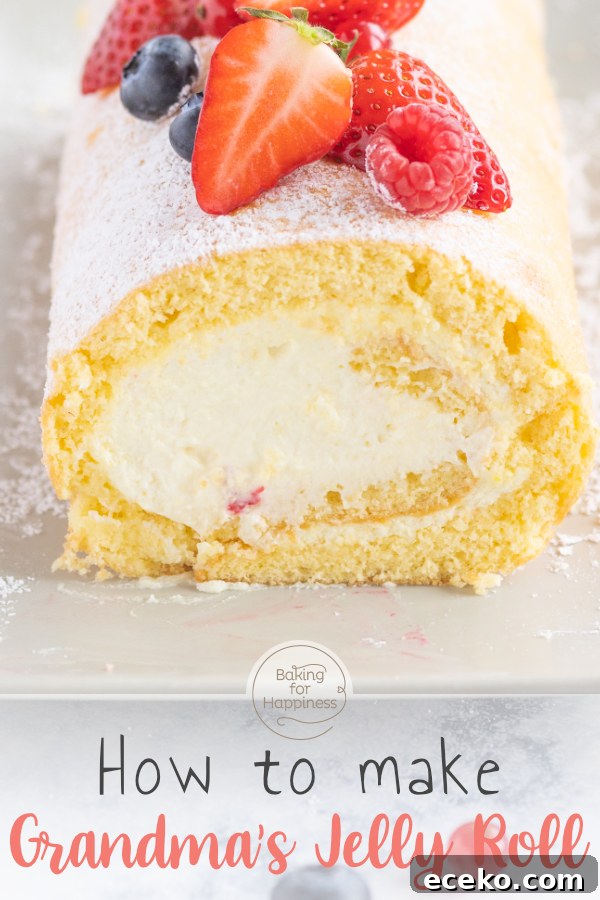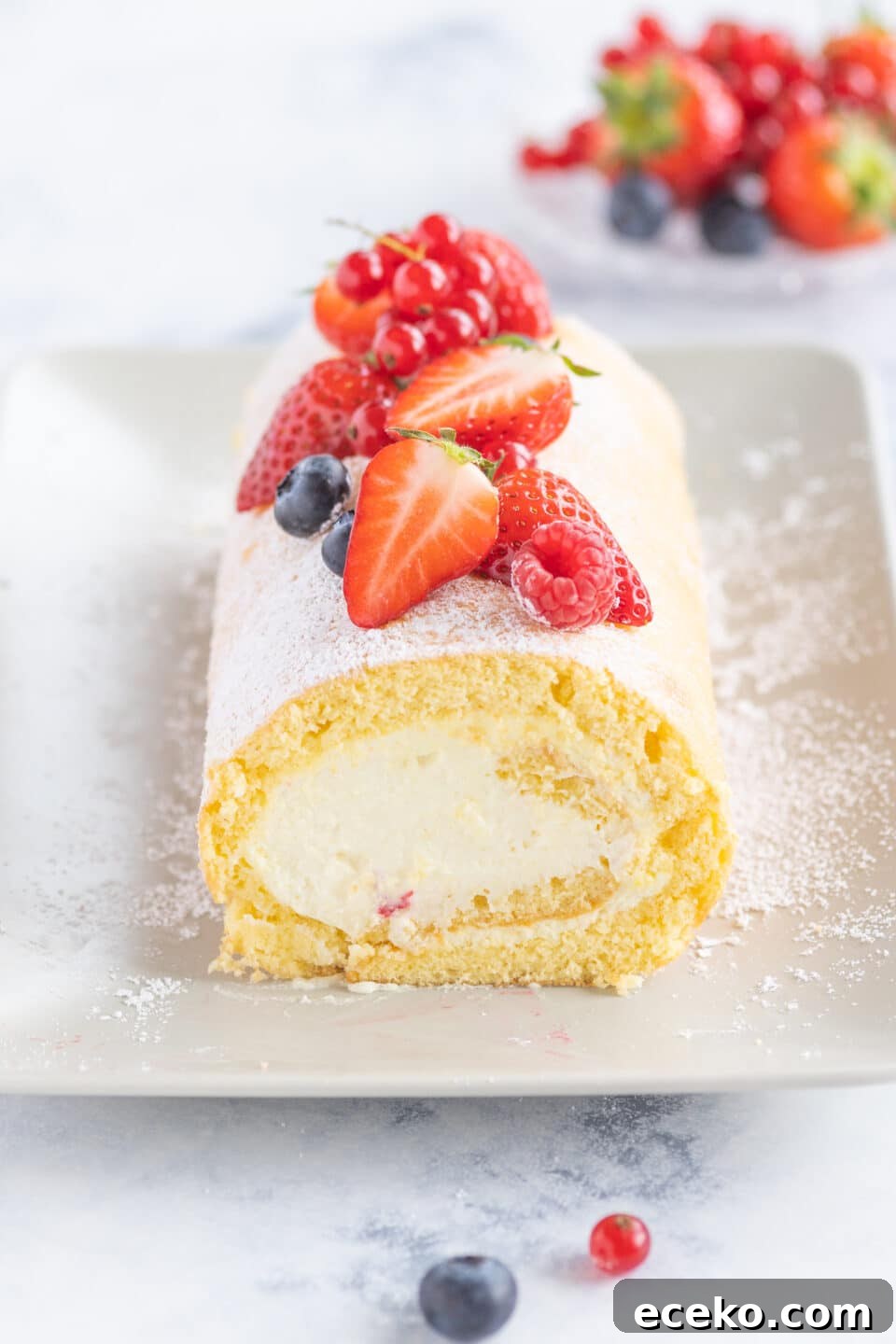
Step-by-step instructions for a classic jelly roll that can be filled and decorated in many ways. This recipe is written for beginners and explains each stage clearly so the roll turns out tender and neat every time.
[feast_advanced_jump_to]
Taste and Occasion
This jelly roll is light, flavorful and makes an attractive centerpiece for afternoon tea, family gatherings or celebrations. Many home bakers avoid roulades because they appear tricky, but with the right technique they are straightforward. In this guide I share the simple steps and practical tips I learned from my grandmother, so you can make a perfect sponge roll without stress.
Ingredients
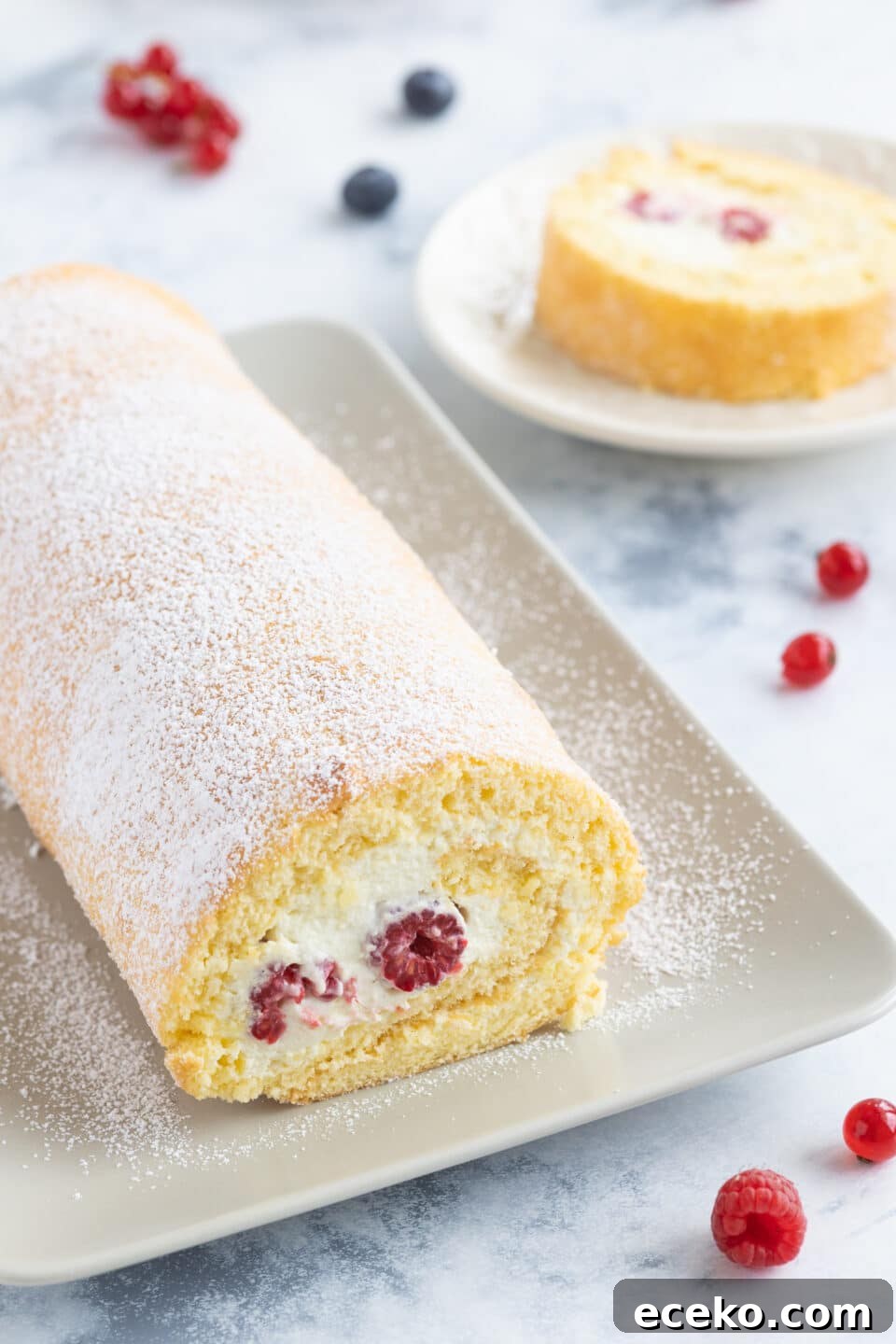
The right sponge is the foundation: it should be flexible enough to roll without cracking and not so wet that the filling runs. Ratios vary across recipes, but this reliable formula uses whole eggs whipped to a stable foam, a small amount of flour and a touch of baking powder for lightness. I also include a simple, stable cream filling that suits fresh fruit, jams or chocolate additions.
How to make the Jelly Roll
Preheat the oven to 400°F / 200°C. Line a baking sheet with parchment and mark a rectangle about 12 x 16 in (30 x 40 cm) using a baking frame or folded foil. Lay a second sheet of parchment or a clean kitchen towel on the counter and sprinkle it with 1 tablespoon of sugar.
Beat 5 medium eggs on high speed for 8–10 minutes until very thick and foamy, gradually adding 130 g (¾ cup) sugar. In a separate bowl, combine 150 g (1 1/5 cups) all-purpose flour with 1 teaspoon baking powder and ½ teaspoon lemon zest (or vanilla). Sift the dry ingredients over the beaten eggs and fold in gently until just combined.
Pour the batter onto the prepared pan, spread evenly and bake immediately for 8–12 minutes until light golden. The sponge is done when it springs back slightly to the touch. Avoid overbaking, which dries the cake and makes it more likely to crack.
Remove from the oven and, while still hot, invert the pan onto the sugared parchment. Carefully peel off the top layer of paper. Replace the paper against the cake and cover with another towel so the sponge can cool slightly and remain moist; leave for about 20 minutes.
For the filling, whip 400 g (1 ¾ cups) cream with a stabilizer until firm. In a separate bowl, blend 200 g (1 cup) cream cheese with 100 g (½ cup) sugar and 1 tablespoon lemon juice until smooth; fold the whipped cream into the cream cheese mixture. If you want a firmer filling, add gelatin or a vegetarian gelling agent according to package instructions.
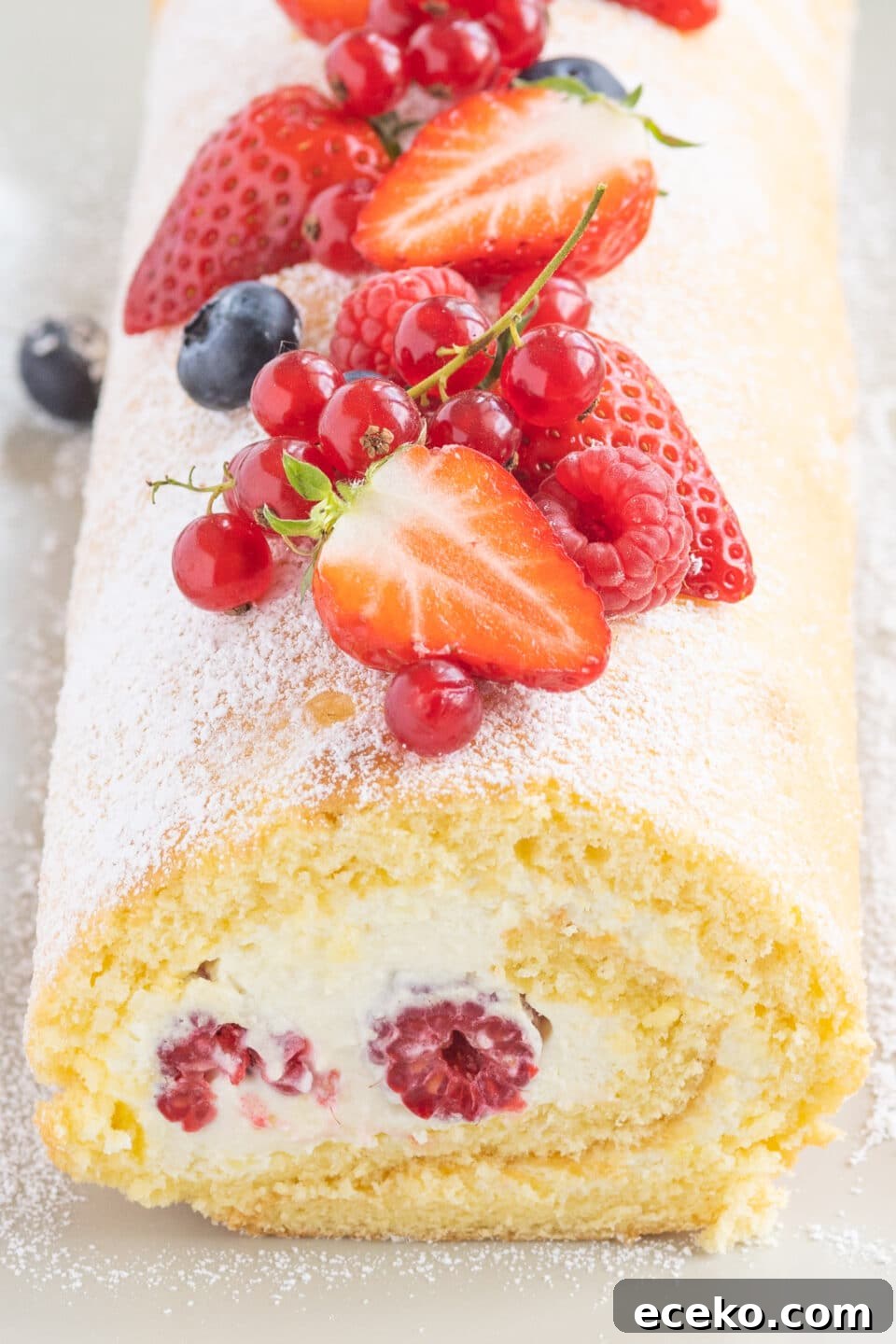
Unroll the cooled sponge, spread the filling evenly leaving a small border. Add fresh fruit or jam along the edge nearest you if you like, creating a small mound. Using the parchment underneath, roll the sponge tightly from the long side into a neat log. Gently shape the roll with your hands into a smooth cylinder if needed.
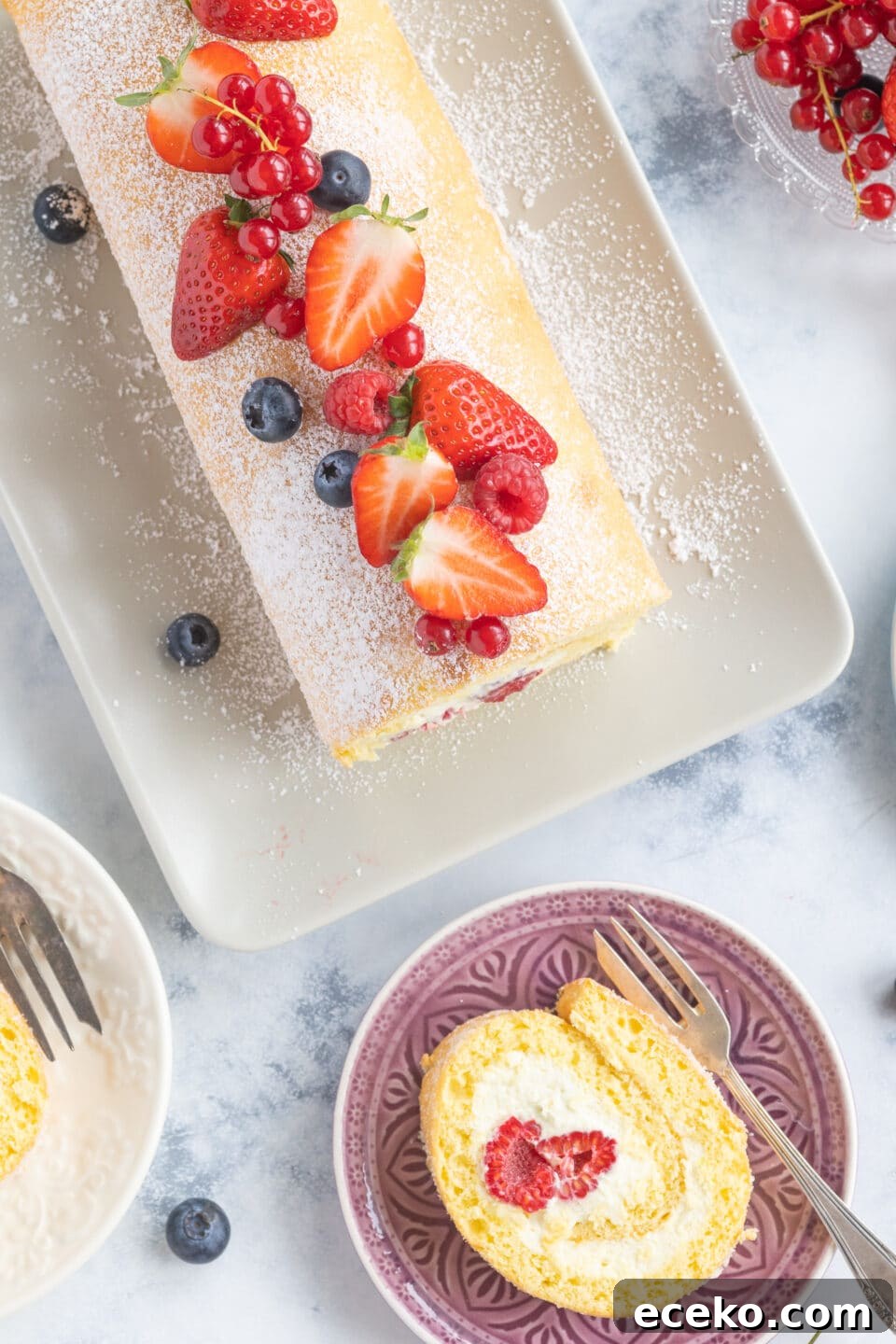
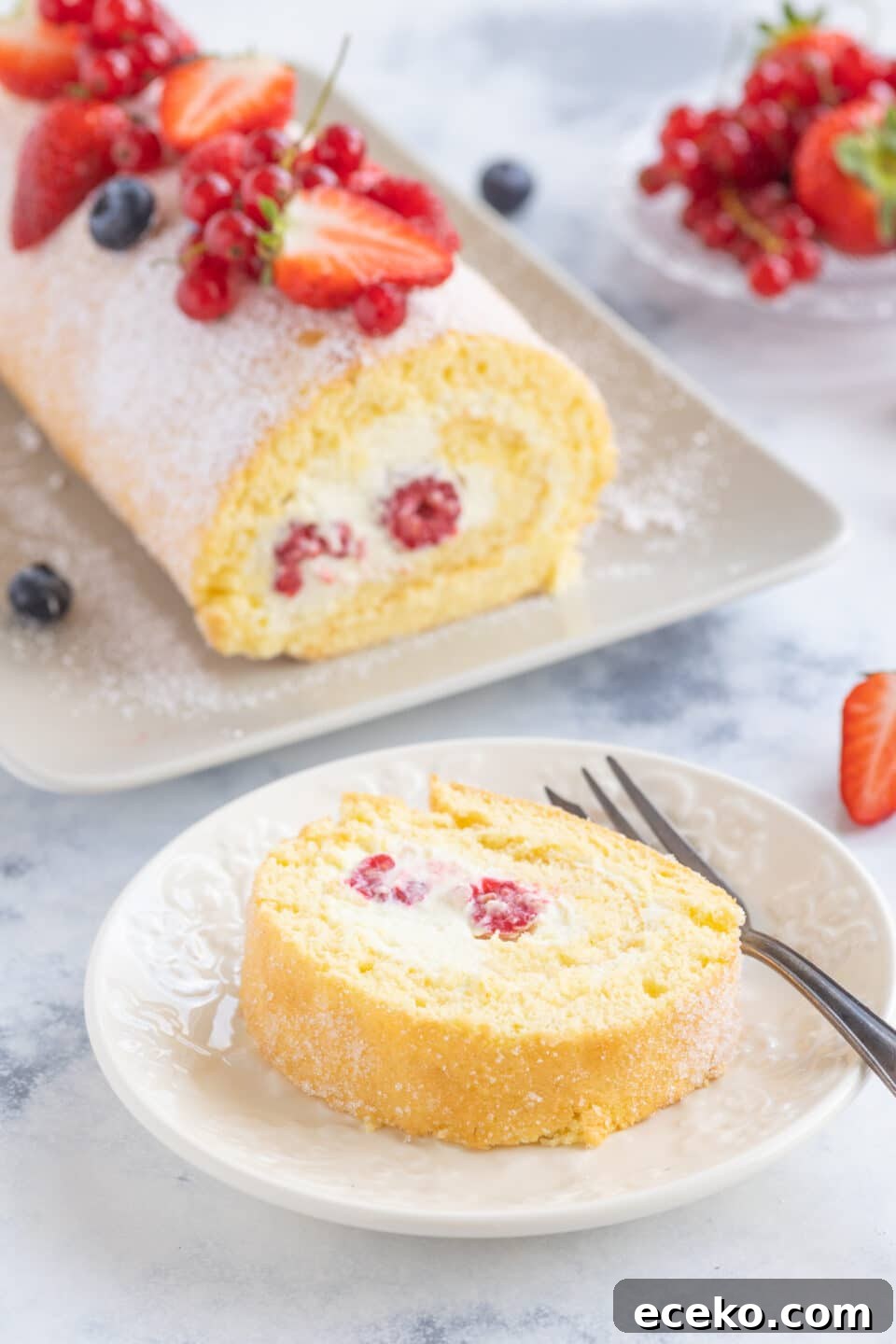
Wrap the roulade in plastic wrap and refrigerate at least 1.5 hours to set. Before serving dust with powdered sugar and garnish with extra cream, berries or sliced fruit.
Top Tip
Follow these tips to guarantee success:
Yes. Beating whole eggs until very foamy produces a light sponge and is easier than separating yolks and whites. Fold the flour in gently to preserve the airiness.
Cool the sponge covered so it remains moist; in this method about 20 minutes is sufficient before unrolling and filling.
Peel the paper away immediately after inverting. If it resists, wet the paper slightly to loosen it and peel carefully.
Tears usually occur when the cake is overbaked and dry or if it cools uncovered and loses moisture. Cooling covered keeps the sponge pliable.
Position the rectangle so the longer side faces you and roll it tightly from that side using the parchment to guide it. Rolling from the long side creates even spirals and a smoother appearance.
A cream- or curd-filled roll keeps up to about 3 days refrigerated. It can be made a day ahead to allow flavors to meld. Freezing is possible depending on the filling.
Recipe Card
Click on the stars to rate the recipe
Jelly Roll
Ingredients
For the dough
- 5 eggs, medium
- 130 grams (¾ cup) sugar
- 150 grams (1 ⅕ cups) all-purpose flour
- 1 teaspoon baking powder
- ½ teaspoon lemon zest, or vanilla to taste
- 1 tablespoon sugar, to sprinkle on the baking paper
For the filling
- 400 gram (1 ¾ cups) cream
- 3 packets cream stiffener, or gelling agent
- 200 grams (1 cup) cream cheese, or low-fat curd cheese
- 100 grams (½ cup) sugar, depending on the type of fruit
- 1 tablespoon lemon juice
- fruit, according to taste
Instructions
-
Preheat oven to 400°F/200°C. Line a baking sheet with parchment and mark a 30 x 40 cm rectangle. Prepare a second parchment or towel on the work surface and sprinkle with 1 tablespoon sugar. Beat eggs and sugar until very foamy.
-
Sift flour and baking powder over the egg foam and fold in gently. Spread batter on the pan and bake 8–12 minutes until springy and light golden. Do not overbake.
-
Invert the hot cake onto the sugared parchment, remove the top paper, replace the parchment and cover so the sponge cools slightly while remaining moist. Cool about 20 minutes.
-
Whip cream with stabilizer until firm. Blend cream cheese, sugar and lemon juice, then fold in whipped cream.
-
Spread filling on the cooled sponge, leaving a small border. Add fruit if desired, then roll tightly from the long side using the parchment to guide you. Shape as needed.
-
Wrap in plastic and chill at least 1.5 hours. Dust with powdered sugar and decorate before serving.
Notes
- To stabilize the filling use gelatin or agar-agar according to the package instructions (about 4 sheets or equivalent powder if required).
- If you need extra guidance, consult the blog post for additional tips on sponge dough and troubleshooting.
Ingredient substitutions
You can substitute mascarpone, curd cheese or quark for cream cheese; adjust sweetness and stabilizer to match the filling texture you prefer.
Variations
This basic recipe is very versatile. Use quark or mascarpone for a different texture, add a thin layer of jam before the cream, fold in chocolate shavings, or top with fresh berries. You can omit gelatin for a softer filling or include it when you need a firmer slice for serving.