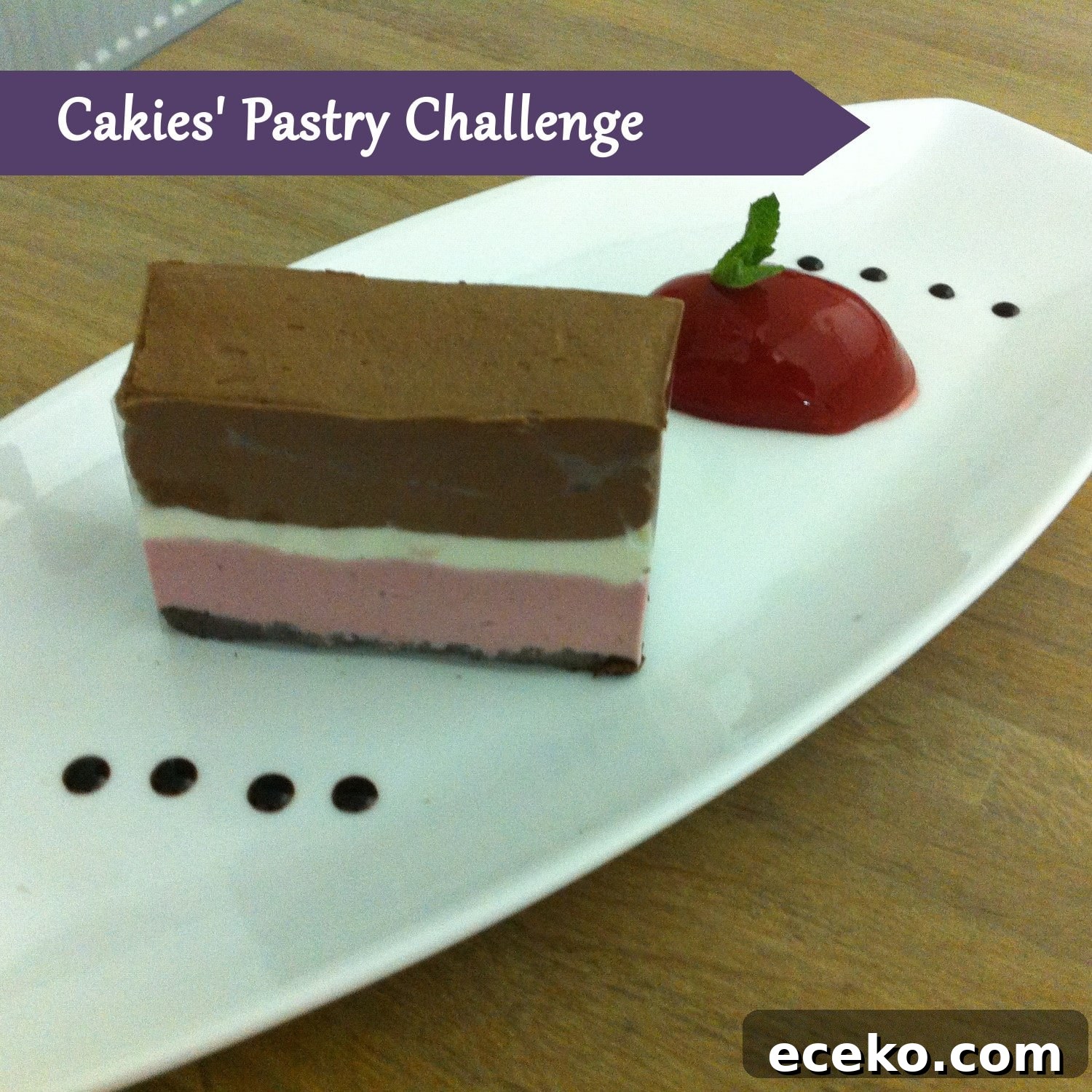
We began the seventh and penultimate module today, focused entirely on desserts. From the moment class started we were working: each pair was given two recipes—one raspberry, one chocolate—and our task was to prepare and present a plated dessert by the end of the day. We could combine elements from both recipes or prepare them separately; the primary goal was a composed plate that showcased technique and flavor balance.
Preparing the components
The raspberry recipe consisted of a crèmeux, a bavarois and a sponge, while the chocolate recipe included a crèmeux, a mousse and a sponge. This was my first time making a crèmeux. The term literally means “creamy,” and the texture lives up to the name: rich, silky and smooth. For the raspberry crèmeux we reduced raspberry purée with sugar, tempered yolks into the hot purée, then incorporated gelatin and cold butter to finish. The mixture was poured into molds and frozen to set.
For the chocolate crèmeux the method was similar, but we used milk and cream as the liquid base and folded in cream cheese and chopped chocolate instead of butter. Both crèmeux preparations require careful tempering and rapid chilling so they achieve the correct texture and hold in a mold.
The raspberry sponge was a dacquoise-style batter incorporating almond powder and meringue, which produces a light, slightly chewy texture. The chocolate sponge was a rich, tender cake with slivered almonds folded in for crunch. To make shaping easier we spread each sponge thinly on sheet pans; once baked and cooled we could cut precise shapes to fit our molds or to use as plated elements.
The raspberry bavarois and the chocolate mousse were familiar preparations; we had made them in earlier modules, so they were straightforward. The bavarois was a lighter, mousse-like set cream that pairs well with fruit, and the chocolate mousse was airy and chocolate-forward. Both were chilled to set before assembly.
Assembly and setbacks
With all the elements prepared we planned our final assembly: we’d place the chocolate crèmeux inside a raspberry bavarois mold, and the raspberry crèmeux inside the chocolate mousse mold, using separate forms for each composition. That combination would deliver contrasting flavors and textures—tangy fruit against rounded chocolate, and creamy crèmeux encased in airy sets.
However, several things started to go wrong during assembly. The molds didn’t release cleanly because the desserts hadn’t frozen long enough; some components we expected to become firm remained too soft. After attempting multiple unmolds, we ended up with a number of imperfect elements that couldn’t be used as intended for plated presentation.
At the last minute my partner suggested a simple yet effective solution: build a layered plate with three tiers—raspberry, whipped cream, and chocolate. We salvaged a successfully set raspberry crèmeux that had released cleanly from its mold, paired it with stabilized whipped cream, and added pieces of the chocolate sponge. The resulting plated dessert combined the bright acidity of raspberry, the lightness of whipped cream, and the depth of chocolate. Visually it looked strong and the textures complemented each other well.
The final plate not only looked appealing but tasted wonderful. The crèmeux was the highlight: soft, creamy and velvety, it practically melted on the tongue. The balance between the tart raspberry and the richer chocolate components made each bite interesting. I’ll definitely be making crèmeux again—its texture and flavor lift desserts beautifully.
We took the remaining imperfect pieces home rather than discarding them. I didn’t have time to photograph the unsuccessful elements, but fortunately only one plated dessert was required for the presentation, and our composed plate demonstrated the techniques and flavor profile we aimed to show.